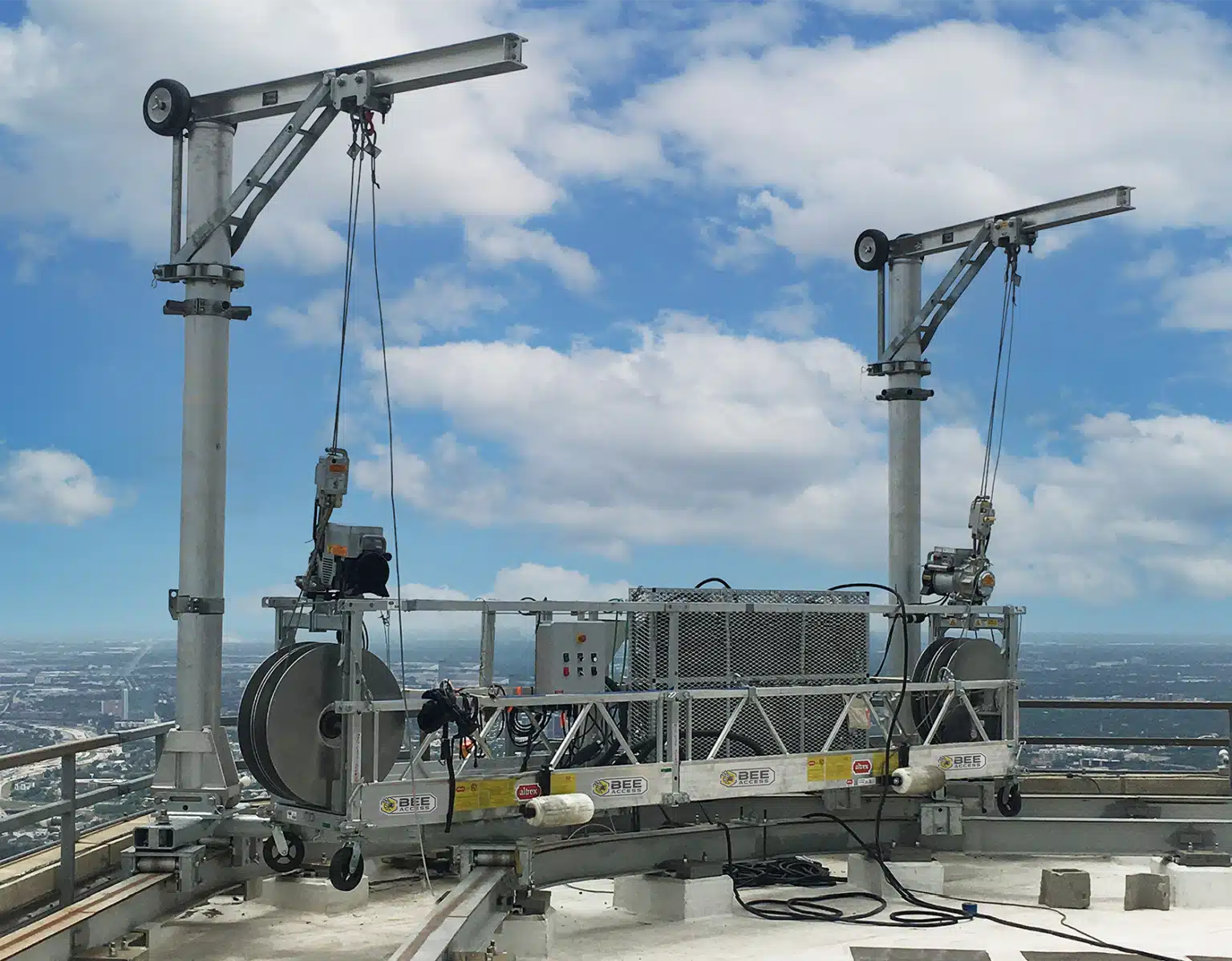
Cal/OSHA-compliant roof davit systems for California high-rises and mid-rises. Designed, fabricated, installed, and load tested by Title 8 Builders, all under one roof.

Cal/OSHA-compliant roof davit systems for California high-rises and mid-rises. Designed, fabricated, installed, and load tested by Title 8 Builders, all under one roof.
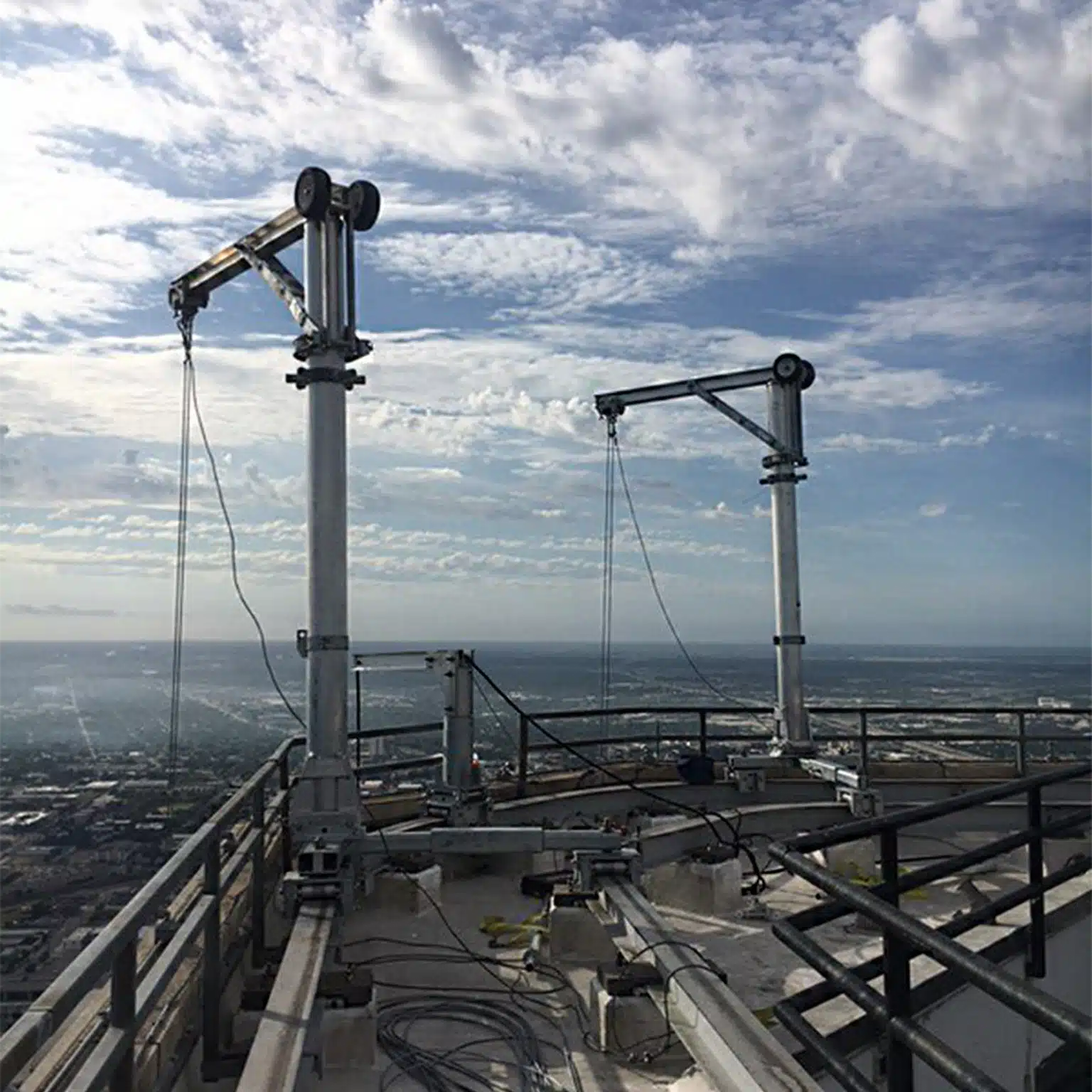
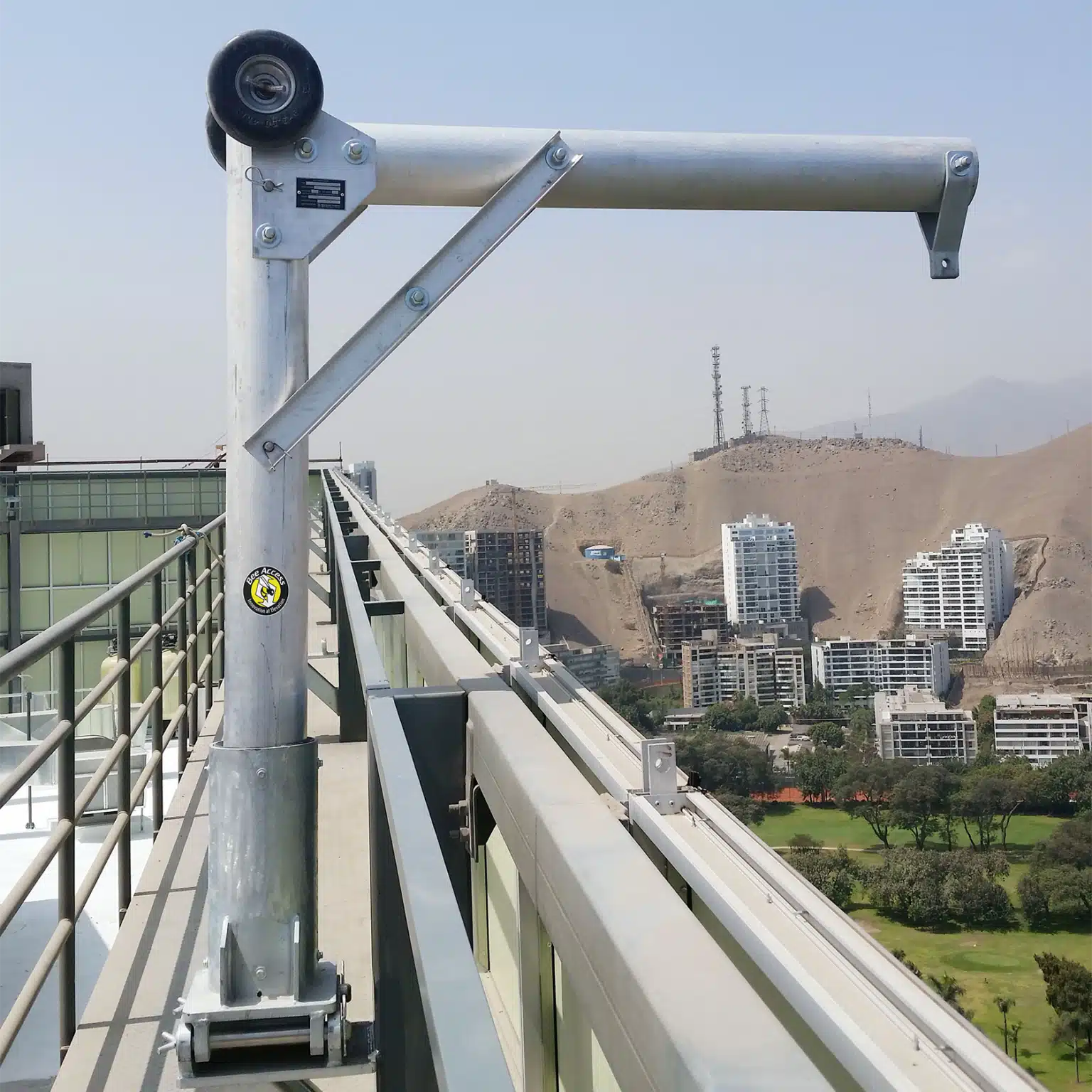
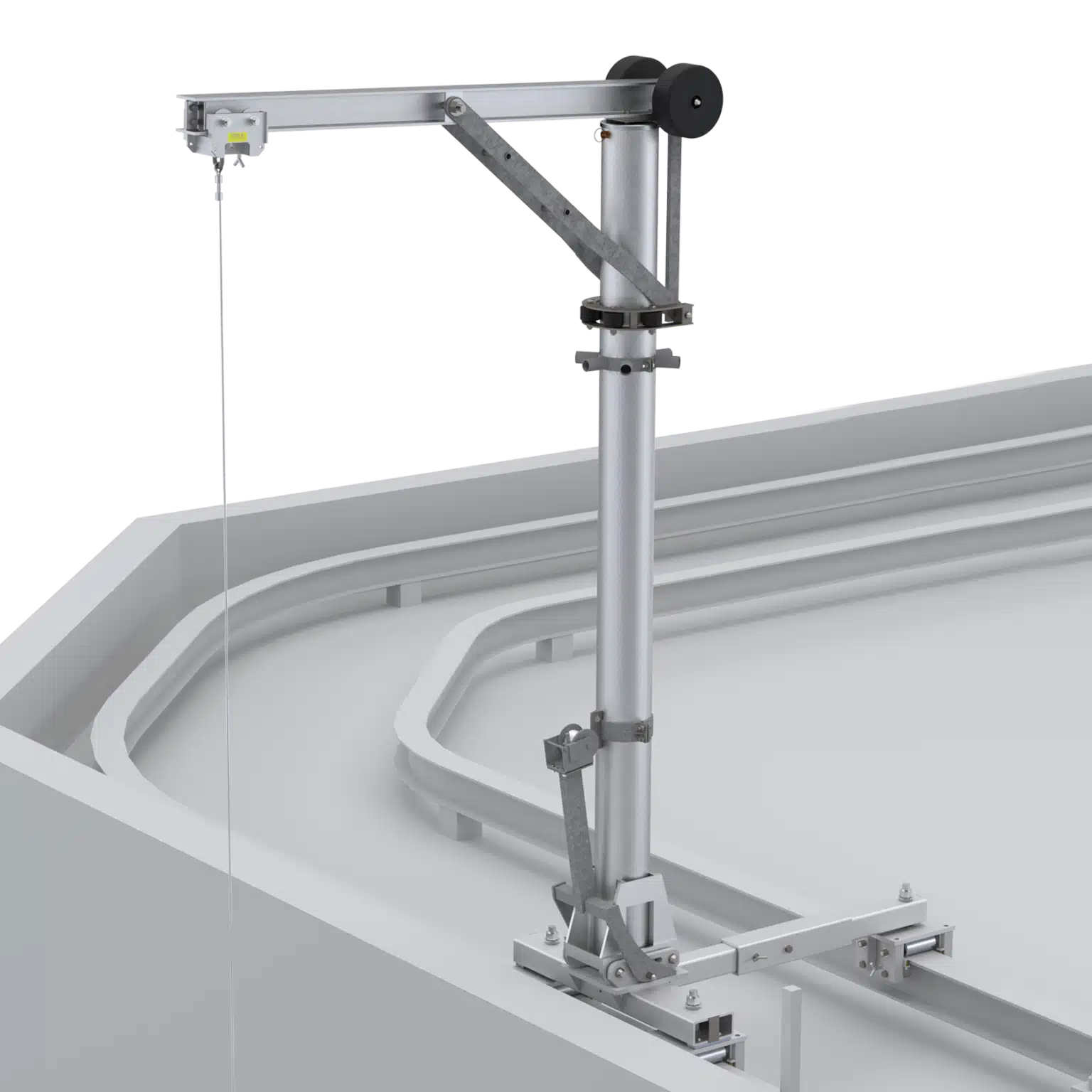
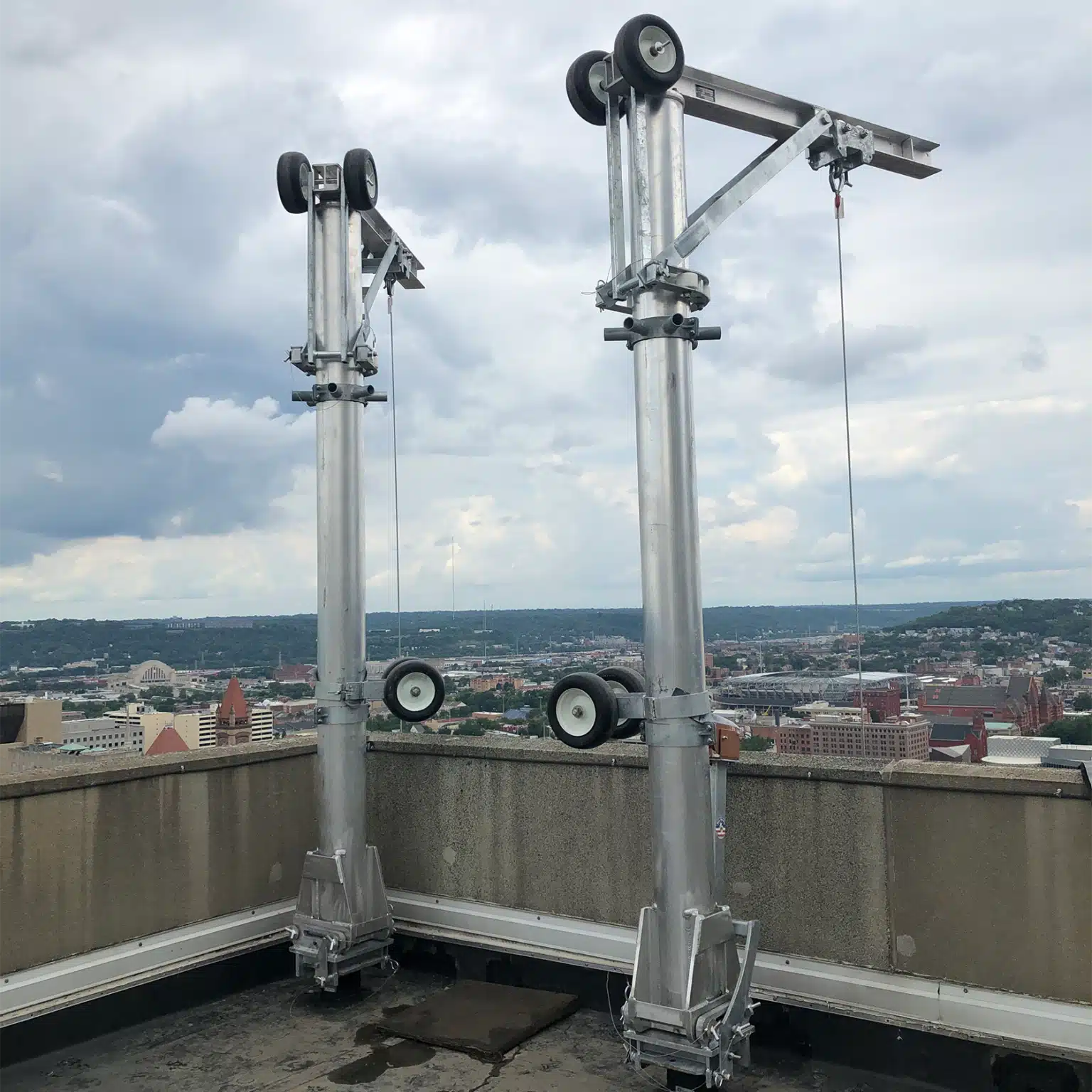
A roof davit system is a permanent facade access solution made up of two components that work together: a fixed davit base and a portable davit arm.
The davit base is a rooftop anchor point permanently secured to the building structure — bolted to structural steel, embedded in a concrete slab during construction, or mounted to a parapet wall. Bases are positioned at engineered intervals along the roofline, directly above the sections of facade that require regular maintenance access.
The davit arm is a portable, crane-like assembly consisting of a vertical mast and a horizontal boom. When exterior work is scheduled, crews insert the arm into the base through a pinned connection, rotate the boom outward past the parapet, and rig a swing stage or powered platform from the arm to carry workers along the building face. Once the work is complete, the arm is pulled back, disconnected, and stored, leaving only the low-profile base on the roof.
In California, Cal/OSHA Title 8 requires permanent facade access devices on any building over 36 feet or three stories. For buildings above 48 feet, exceptions are nearly nonexistent.
Title 8 Builders engineers every davit system around the specific building it serves. Our team evaluates structural conditions, specifies base placement and arm reach, selects materials suited to the environment, and delivers a fully documented installation that satisfies Cal/OSHA from the first inspection forward.
Commercial High-Rise & Mid-Rise Buildings: Roof davit systems give window washing and facade maintenance crews a permanent, code-compliant rigging point on buildings where exterior access is needed on a recurring schedule.
Powered Platform & BMU Operations: When a building requires powered platform operations, davit pairs provide the suspension points for full-width platform systems with roof-mounted or self-powered hoists. Each base is rated to handle the dynamic loads that powered equipment generates.
Healthcare & Institutional Campuses: Providing permanent facade access on hospitals, university buildings, and research facilities with complex architectural facades and strict safety documentation requirements for accreditation.
Buildings with Terraces, Setbacks, and Stepped Rooflines: Portable davit arms can move between bases installed at different roof levels, giving crews the ability to reach facade sections that a single fixed system could not cover.
Existing Buildings Requiring Code Upgrades: Older properties that lack permanent facade access can be brought into Cal/OSHA compliance with a retrofit davit installation. Bolt-on base attachments allow the system to be added to occupied buildings without major structural alteration.
California’s regulatory standard for facade access goes beyond what federal OSHA requires. The California Code of Regulations, Title 8, sets specific mandates for how roof davit systems must be engineered, tested, and documented, and building owners bear the responsibility for compliance.
Title 8 Builders designs every davit project to satisfy these requirements before the system enters service. Our engineers produce stamped structural calculations for each installation, and every davit base is proof load tested and documented before workers ever use it.
Relocatable Access Across the Roofline. The defining advantage of a davit system is portability. A single set of davit arms serves every installed base on the building, which means full-perimeter facade coverage without dedicated equipment at every position. This makes davits a practical choice over fixed outrigger systems for buildings that need access at many locations.
Unobstructed Roof When Not in Use. Davit arms are stored off the roof between maintenance cycles. Only the flush or low-profile bases remain, preserving usable rooftop space for HVAC equipment, solar arrays, amenity decks, or general foot traffic.
Two Rigging Options. Roof-rigged configurations let workers board the platform on the rooftop before launching over the edge, a safer setup for high-wind environments. Ground-rigged configurations suspend platforms from street level, which can simplify logistics on buildings with limited roof access. Title 8 engineers the right approach for each project.
Long-Term Cost Advantage Over Rentals. Renting parapet clamps, temporary outriggers, or portable davit equipment for every maintenance cycle adds up quickly. A permanent system pays for itself over time by eliminating repeat mobilization, rental fees, and temporary engineering reviews, making it the more economical choice for any building on a regular facade maintenance schedule.
Works With Your Other Safety Systems. Davits integrate with intermittent stabilization anchors, monorail tracks, and tieback anchors to deliver comprehensive facade coverage. Every worker must also be independently tied back to a separate fall protection anchor point, providing the redundancy Cal/OSHA demands.
The right base attachment depends on the building’s construction type, age, roof system, and structural capacity. Title 8 Builders specifies the connection method during the engineering phase based on thorough structural analysis.
Cast-In-Place Embeds: Socket assemblies set into wet concrete during new construction. This is the strongest and most cost-effective option when coordinated with the build schedule and EBM design during pre-construction planning.
Bolt-On Plate Connections: Surface-mounted base plates secured with structural bolts to existing concrete or steel framing. Ideal for retrofit installations on buildings that are already occupied or in service.
Welded Connections: Davit bases welded directly to exposed structural steel members for maximum load transfer. Most common on steel-framed towers where the structural frame is accessible from the roof.
Flush-Mounted Socket Pedestals. Recessed base sockets that sit at or below the finished roof surface. Selected when the building’s rooftop design requires a concealed or aesthetically minimal installation.
For buildings that need broader system upgrades alongside new davit installations, Title 8 also provides system retrofitting and compliance services.
Title 8 Builders handles assessment, engineering, fabrication, installation, and testing entirely in-house.
Step 1: Assessment & Design Site evaluation, structural analysis, and roof layout engineered to your building’s specific conditions.
Step 2: Engineer Our in-house team produces CAD layouts and stamped structural calculations specifying base positions, arm reach, load paths, and materials.
Step 3: Installation Professional installation by our trained crews, following the engineer-of-record’s specifications exactly.
Step 4: Test and Certify Proof load testing on every anchor with full documentation for Cal/OSHA compliance records.
Single-Source Delivery. Engineering, fabrication, installation, testing, and certification all happen through our team. Fewer hand-offs mean faster project completion and less room for the coordination failures that slow down multi-vendor projects.
Site-Specific Engineering on Every Project. We do not apply generic design templates. Every davit layout starts with a structural analysis of the actual building, and every set of calculations is stamped by a licensed engineer for that specific installation.
Built for Buildings That Don’t Fit the Mold. Unusual parapet heights, irregular roof geometry, deep setbacks, existing mechanical equipment in the way — these are the conditions we work with every day. Title 8 has the fabrication capability and field experience to build solutions around constraints, not in spite of them.
Rooted in California. Based in Valencia and working across the state, Title 8 Builders focuses exclusively on fall protection and facade access systems for California buildings.
Tell us about your building and we will scope the project. Title 8 Builders handles the engineering, fabrication, installation, testing, and certification, so you get a compliant, documented system without managing multiple vendors.
Roof davit systems provide permanent facade access on commercial buildings by supporting suspended platforms, swing stages, and bosun’s chairs that workers use for window washing, exterior repairs, and building inspections.
Cal/OSHA requires buildings over 36 feet or three stories in California to have permanent tie-back or suspension devices for exterior maintenance access. Roof davit systems are one of the most widely used solutions to meet this requirement.
Cal/OSHA requires each roof davit base to sustain a minimum of 5,000 pounds of force in any direction without permanent deformation.
Roof davit arms are portable and relocatable between permanently installed bases along a building’s roofline, while fixed outrigger systems remain permanently mounted in a single position. Davit systems provide greater flexibility for buildings that require facade access at multiple locations.
Roof davit bases are available in cast-in-place embeds for new construction, bolt-on plate connections for retrofit installations, welded connections to structural steel, and mobile socket pedestals for flush-mounted applications. Title 8 Builders engineers the correct attachment method for each project.