What Are Fall Protection Anchor Systems?
Fall protection anchor systems are the structural anchor points in a fall protection system—the load-bearing connection point, or anchor point, where a worker attached by a lanyard, self-retracting lifeline, horizontal lifeline systems, vertical lifelines, or rope access line stays connected to the structure and protected from falling to the ground.
For facility managers, safety directors, property owners, general contractors, and public agency maintenance teams responsible for California commercial, industrial, institutional, and municipal facilities, the right anchor depends on factors such as the work area, substrate, and duration of access. Different types include single-point, permanent installations, and temporary anchor points for short-term project work, typically attached to roof decking, steel, concrete, wood, or other structural members and built for the specific application.
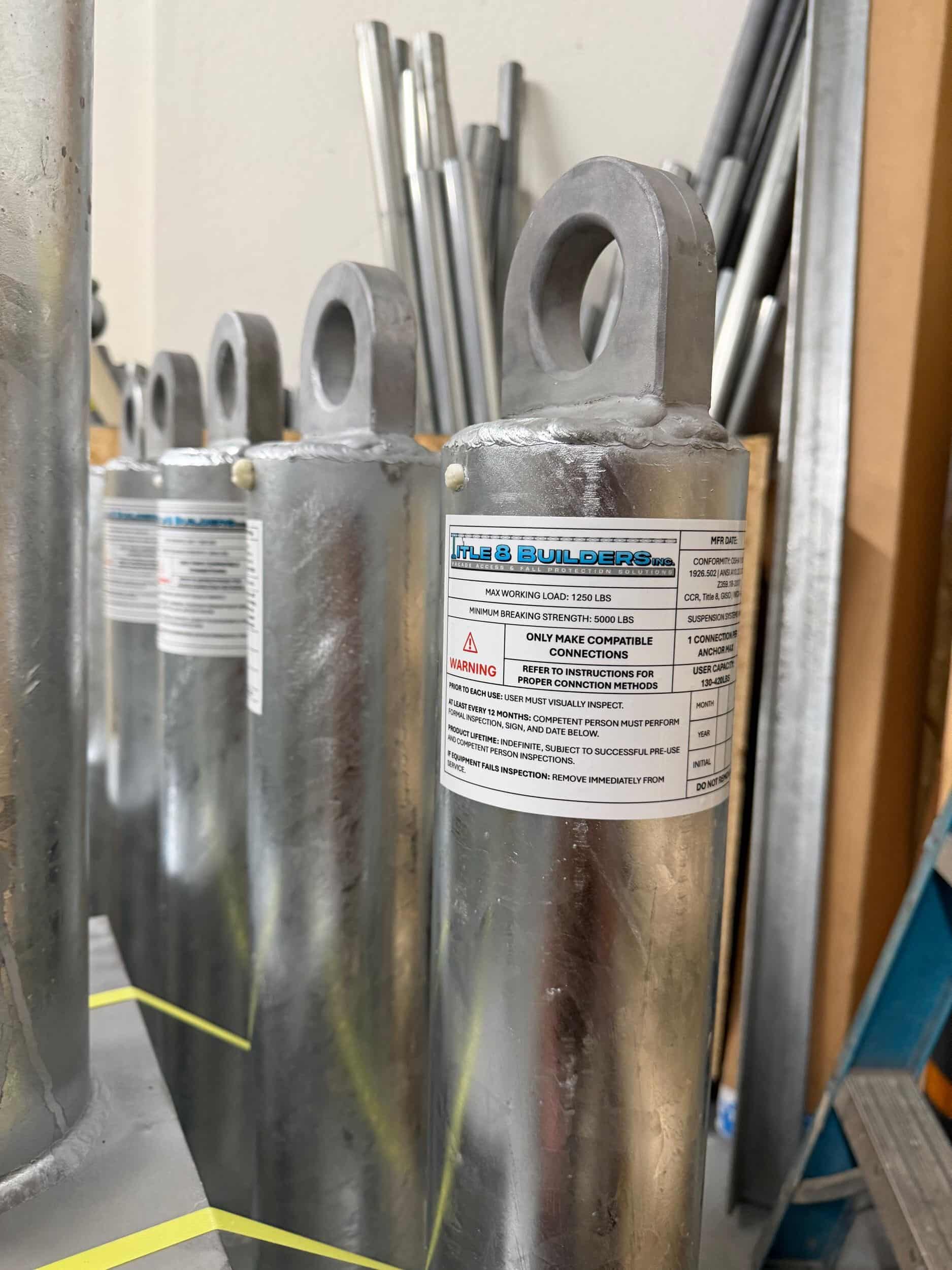
Under Cal/OSHA Title 8 §1670, anchorages used for personal fall arrest systems must support at least 5,000 pounds per attached worker or be engineered as part of a complete system with a safety factor of at least two. That makes anchorage design, proper selection, and regular inspections critical to workplace safety, code compliance, and preventing fall-related injury. This guide explains the main anchor options, where they are used, key engineering and compliance requirements, and how Title 8 Builders approaches design, installation, inspection, and lifecycle management.
Types of Fall Protection Anchors
Title 8 Builders provides two categories of fall protection anchor systems, each suited to a different combination of substrate, work duration, and access requirement. Choosing the right type is the first step in any compliant fall protection plan, and it has to be engineered and rated for the specific application.
Single-Point Anchors
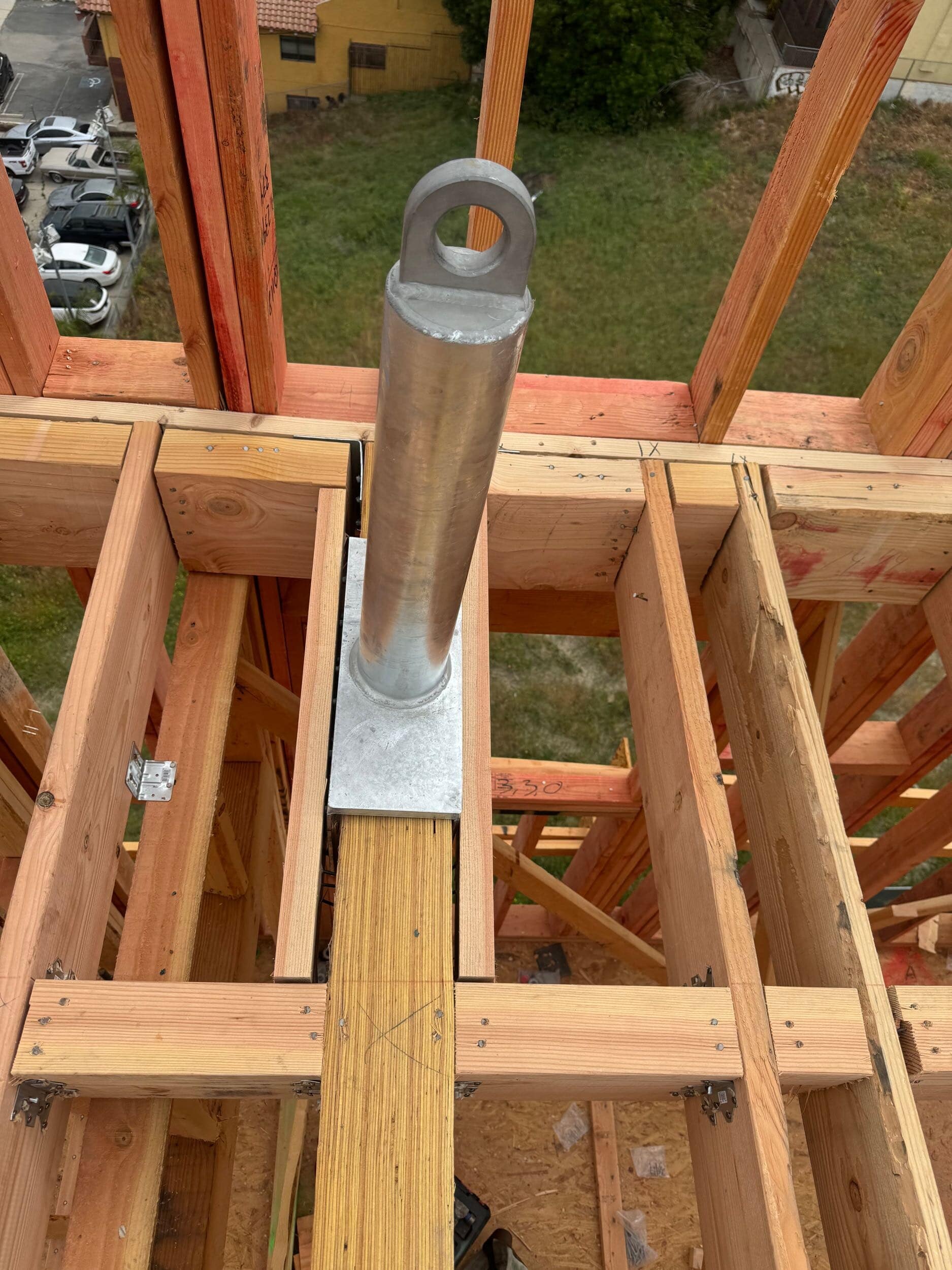
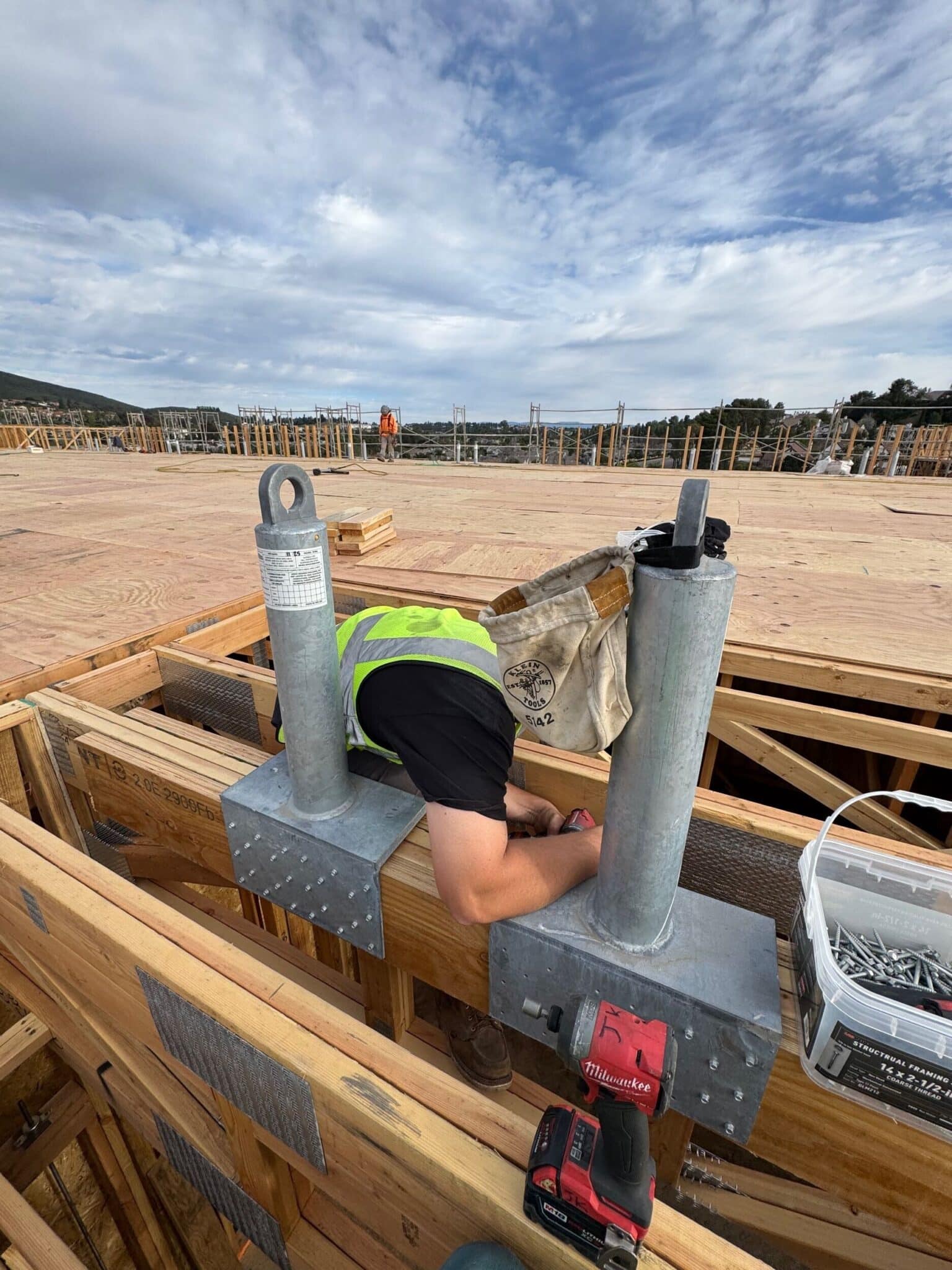
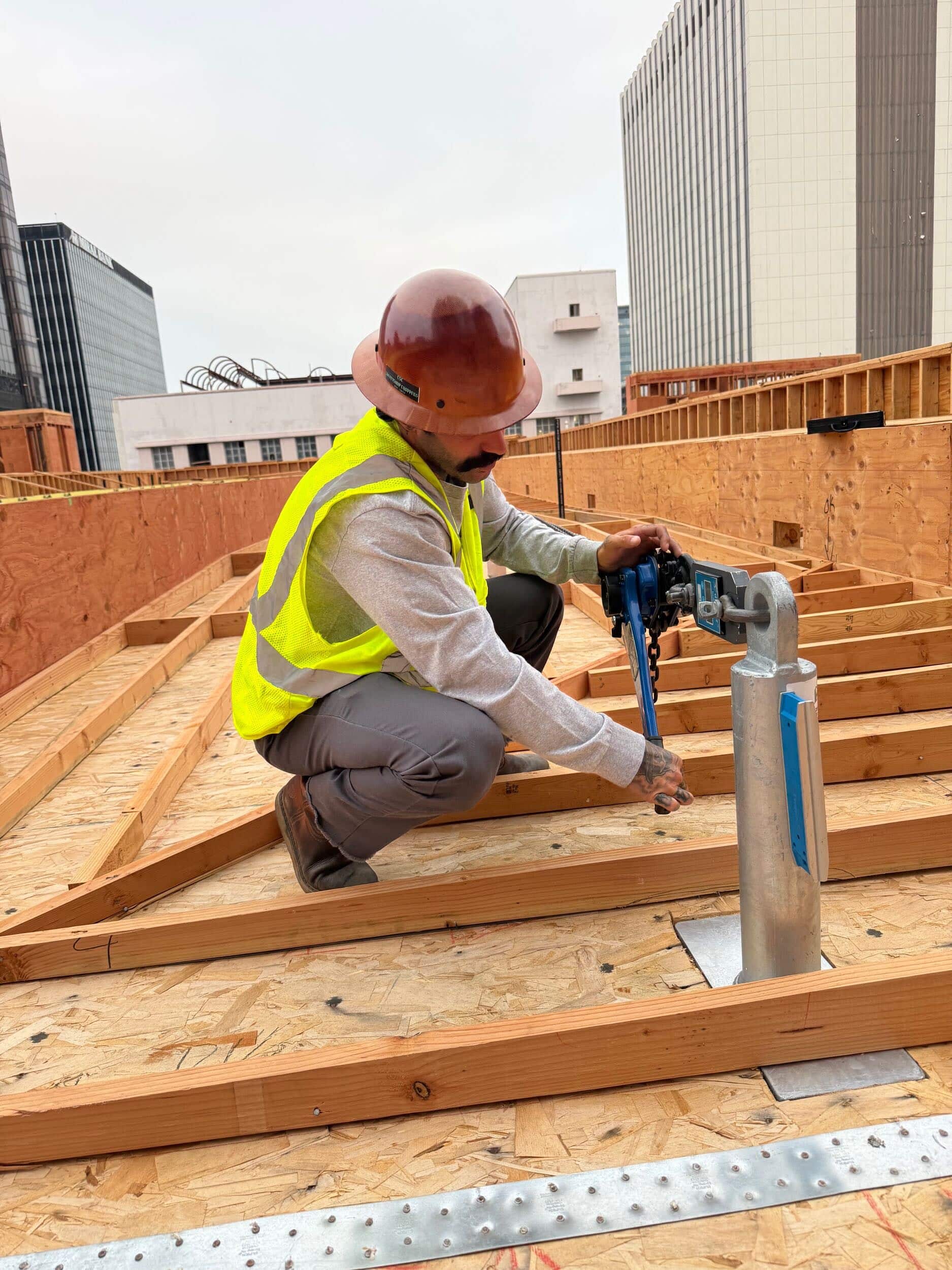
Single-point anchors are the most common and cost-effective anchor solution. They provide one rated connection point for a worker’s lanyard or self-retracting lifeline, and they’re typically installed at fixed locations tied to specific tasks rather than continuous movement across a work area.
Ideal for:
- Clearly defined work zones
- Rooftop maintenance areas
- Localized access points
Permanent Anchors
Permanent roof anchor systems are fixed installations engineered for long-term use on buildings or structures, typically secured with a through-bolt connection into the roof assembly or structural framing when the substrate and load path require it. Because they’re a one-time structural installation, permanent rooftop anchors are engineered up front to the building’s specific structural members. That means ongoing maintenance access doesn’t depend on temporary equipment being brought in for every job.
Common applications include:
- Rooftop fall protection systems
- Façade access support
- Industrial maintenance
- Aircraft and equipment inspection
Engineering and Structural Design Considerations
Anchorage Strength Requirements
Under Cal/OSHA Title 8 §1670, anchorages must support 5,000 pounds per worker or be engineered with a safety factor of at least two. Strength requirements may vary by country. For example, in New Zealand, anchors should sustain a minimum load of 15kN. Depending on the applicable standard, temporary anchors may require a minimum breaking load of 22kN.
Structural Load Path
Fall forces are transferred through:
lanyard → anchor → connection → structural member → building frame
Anchors must be attached to structural elements such as steel beams, reinforced concrete, structural framing systems, or a concrete column where the load path and substrate support it, with durability in demanding conditions tied to appropriate material performance and exposure resistance. Concrete decking anchors are designed for concrete surfaces. Beam anchors are commonly used for steel erection applications and can attach to an i beam or similar structural member.
Placement and System Design
Anchor placement must consider worker reach, fall clearance, swing fall hazards, access to work areas, and worker movement when horizontal lifeline systems are used.
Horizontal lifelines allow workers to move across a large work area while connected.
Fall restraint systems are placed to physically prevent workers from reaching unprotected edges or other fall hazards.
Work positioning systems hold a worker in place so both hands remain free, while fall arrest systems are laid out to stop a worker in mid-air after a fall has occurred.
Qualified vs Competent Person
Anchor systems must be designed and approved by a qualified person, while installation and inspection must be overseen by a competent person. These roles help ensure applicable safety regulations are followed during design, installation, and inspection.
Custom vs Pre-Engineered Anchor Solutions
Pre-Engineered Anchors
Pre-engineered systems are used when standard applications are sufficient and faster deployment is needed.
Custom Engineered Anchors
Custom solutions are required when building structures vary, access challenges exist, or multiple systems must be integrated.
Title 8 Builders designs custom anchor systems around the combination of engineering support, project-specific design, and the needs of each structure, application, and industry requirement. That approach gives customers practical value, with the engineering and installation team supporting each project.
Where Fall Protection Anchors Are Used
- commercial rooftops
- industrial facilities
- manufacturing plants
- warehouses
- construction sites
- aircraft maintenance facilities
- window cleaning
- utility maintenance
Any location where workers are exposed to fall hazards may require properly designed fall protection anchor points used across the industry.
Supporting Cal/OSHA Compliance
Under Cal/OSHA Title 8 §1670, fall protection systems must meet strict requirements for anchorage strength and system performance.
Additionally, safe access to elevated work locations must be provided under §3270.
Engineering ensures that anchor systems meet load requirements, integrate with structural systems, and support safe work practices.
Inspection and Lifecycle Management
Inspection and maintenance of fall protection anchors are critical to workplace safety and safety compliance.
- structural attachment integrity
- anchor condition
- corrosion or damage
- system compatibility
Temporary anchors require regular inspections for wear and damage before each use.
An outdated anchor can create fall hazards even if it was properly installed originally.