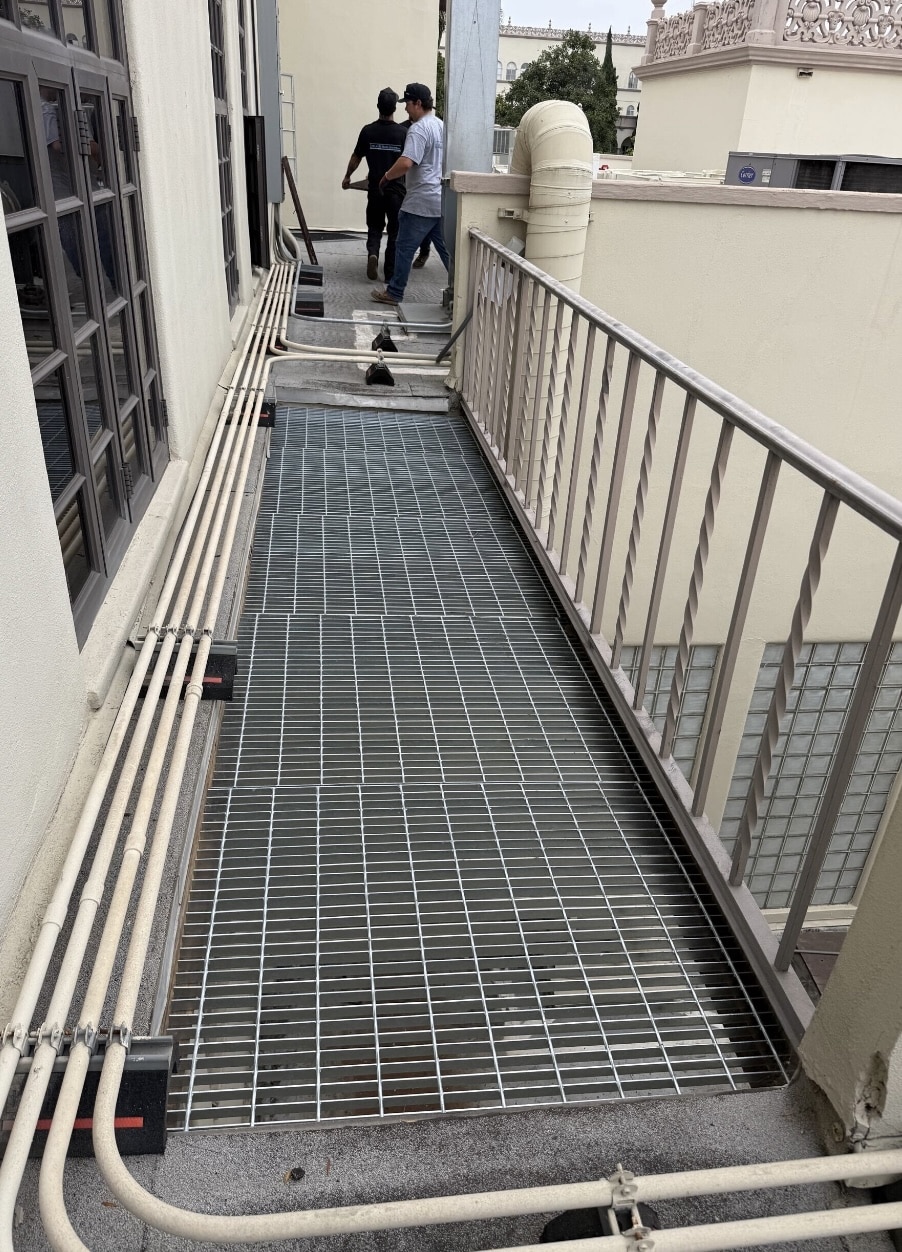
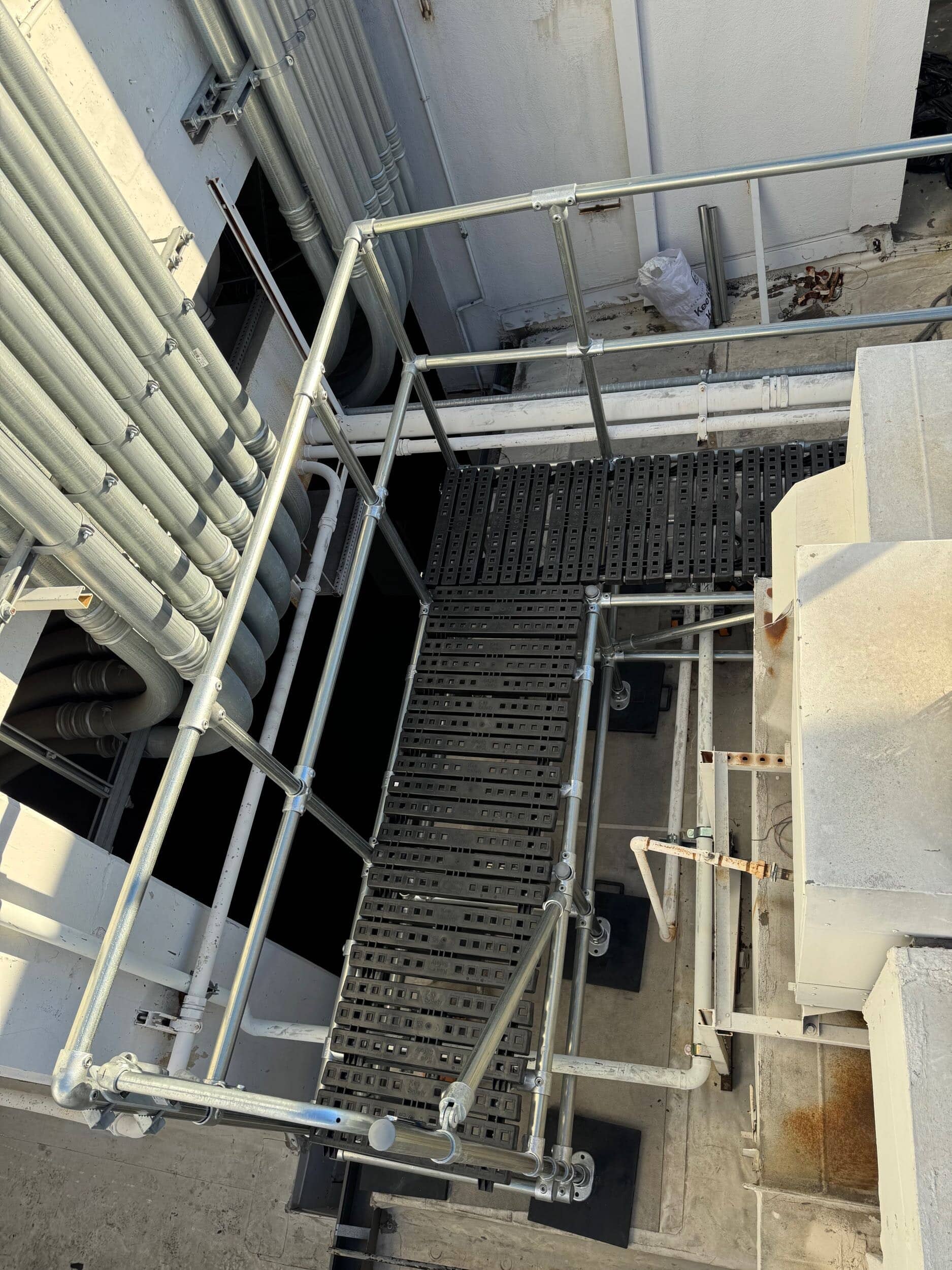
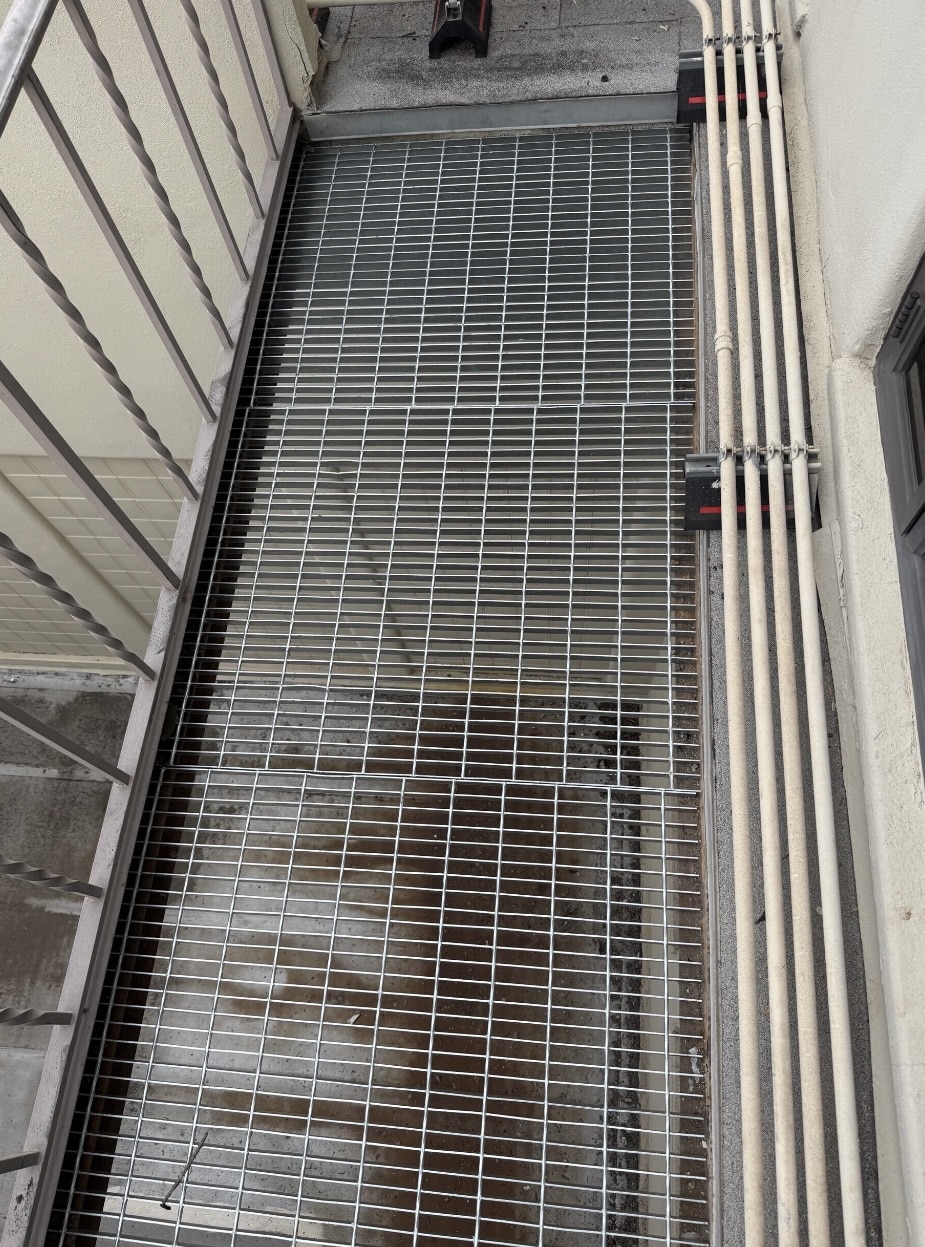
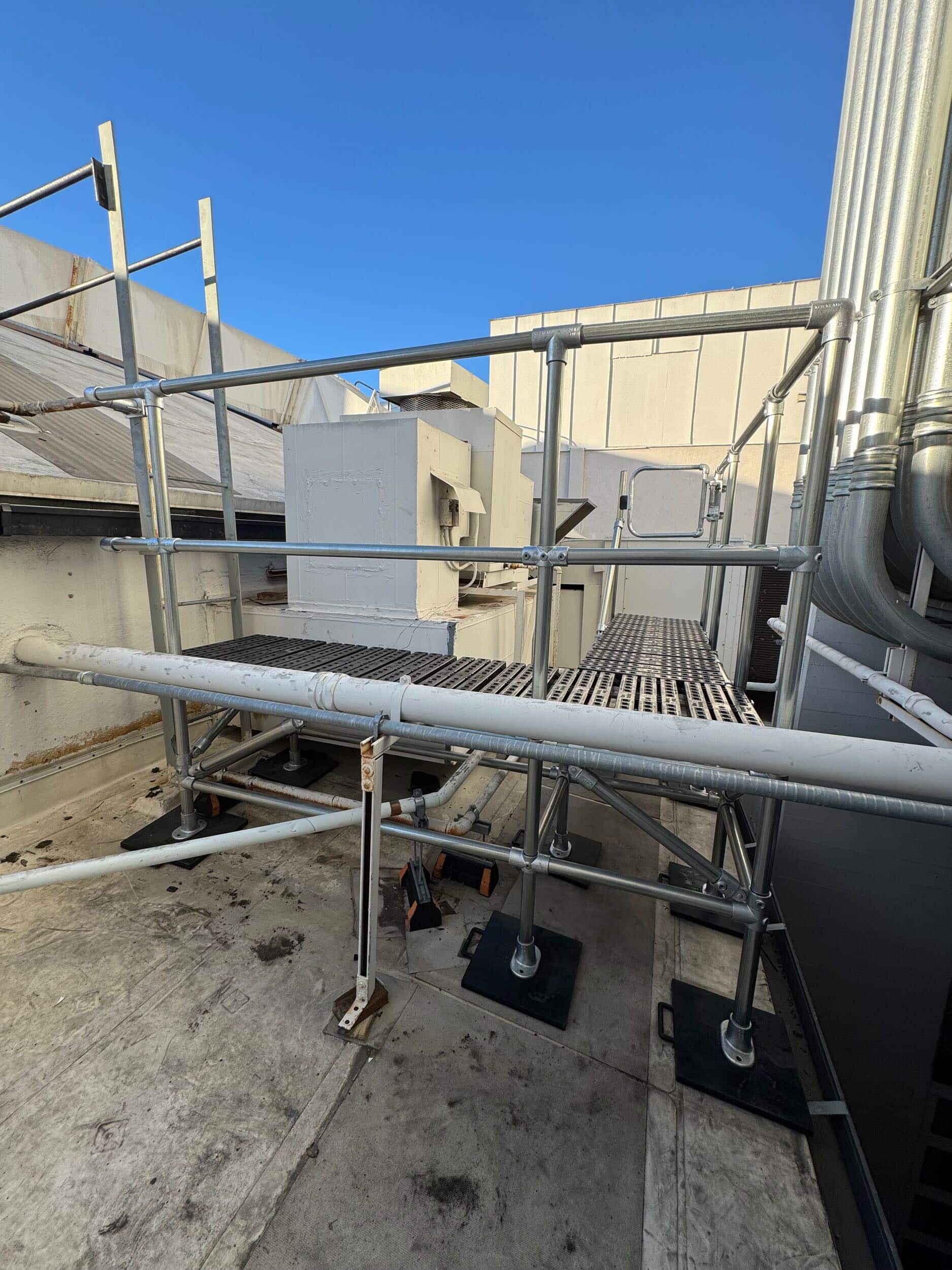
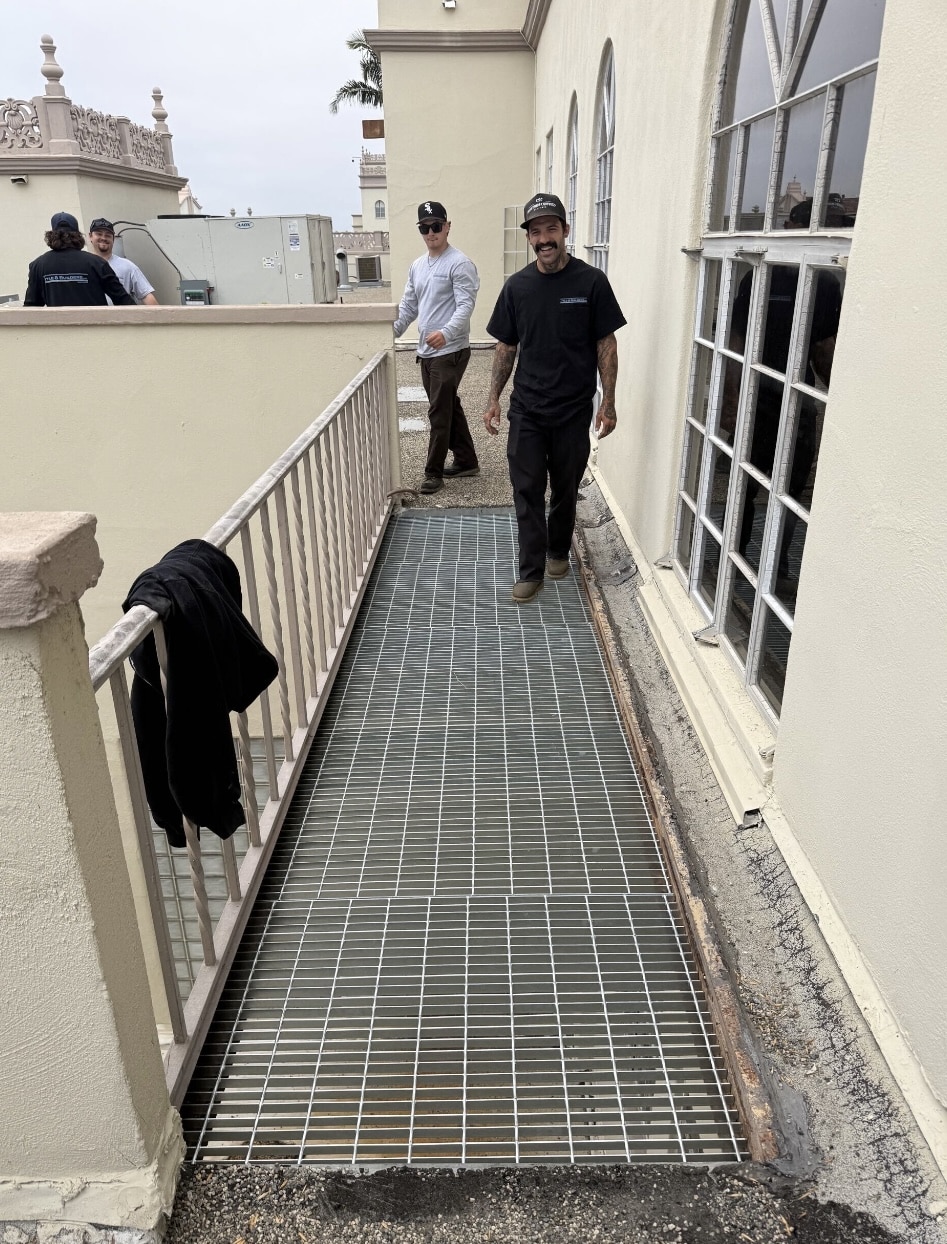
Industrial catwalks are engineered elevated access systems designed to provide safe, compliant pathways for workers operating around equipment, rooftops, and industrial structures. Whether modular or custom-fabricated, these systems are critical for reducing fall hazards and ensuring safe access to elevated work areas.
In California, industrial catwalks must be designed to meet Cal/OSHA Title 8 requirements for safe walking-working surfaces, guardrails, and access to elevated work locations, ensuring workers can safely perform maintenance and operational tasks.
Title 8 Builders delivers modular and custom industrial catwalk systems, engineered to match the specific layout, structural conditions, and operational needs of each facility.
Schedule an On-Site Catwalk Assessment →
Industrial catwalks are permanent elevated walkways supported by structural framing and protected by guardrail systems. They provide controlled access to:
These systems allow workers to safely move through elevated environments without relying on ladders or temporary access methods.
Under Cal/OSHA Title 8 §3270, employers must provide safe access to permanent elevated work locations where equipment is operated or maintained.
Industrial catwalks are primarily fall prevention systems, meaning they eliminate fall exposure by providing:
Under Cal/OSHA Title 8 §3209, guardrails must be installed along open sides of elevated walkways to prevent worker falls.
By integrating guardrails and safe walking surfaces, catwalk systems reduce reliance on fall arrest systems and create inherently safer work environments.
Request Engineering Consultation for Industrial Catwalk Systems →
Modular systems are ideal when:
Benefits include faster installation, reduced fabrication time, and cost efficiency.
Custom systems are required when:
Custom catwalks are engineered specifically for the building to ensure proper fit, structural integrity, and safe access to all required areas.
Loads from workers and equipment travel through the walking surface into framing, supports, and ultimately the building structure. Engineering ensures these loads are safely transferred into structural members such as steel framing and concrete supports.
Catwalk surfaces must provide safe footing in industrial environments. Common materials include galvanized steel grating, serrated anti-slip grating, and aluminum grating.
Under Cal/OSHA Title 8 §3209, guardrails must be installed along open sides, maintain proper height, and provide adequate strength.
Additional features may include midrails and toeboards where falling object hazards exist.
Catwalk systems must connect safely to fixed ladders, stair systems, platforms, and rooftop access points.
These systems are essential wherever workers must safely access elevated equipment or structures.
Many facilities operate with limited or unsafe access systems.
Retrofit catwalk solutions allow facilities to:
Engineering ensures that retrofit systems integrate safely with existing structures.
Industrial catwalk systems play a key role in meeting California safety requirements.
Under Cal/OSHA Title 8 §3270, safe access must be provided to elevated work locations. Additionally, §3209 requires guardrails for fall prevention along open edges.
By providing stable walking surfaces and guardrail protection, industrial catwalks help facilities reduce fall exposure, meet regulatory requirements, and improve operational safety.
Catwalk systems must be inspected periodically to ensure continued safety.
Inspections should evaluate:
Routine inspection ensures systems remain compliant and safe for long-term use.
When workers must routinely access elevated equipment or areas that cannot be safely reached from ground level.
They are primarily fall prevention systems because they eliminate exposure through guarded access.
Yes. Retrofit solutions can be engineered for existing structures.
Modular systems use standardized components, while custom systems are engineered specifically for the facility.
Yes. Guardrails are required along open sides to prevent falls.