What Are Davit Arms?
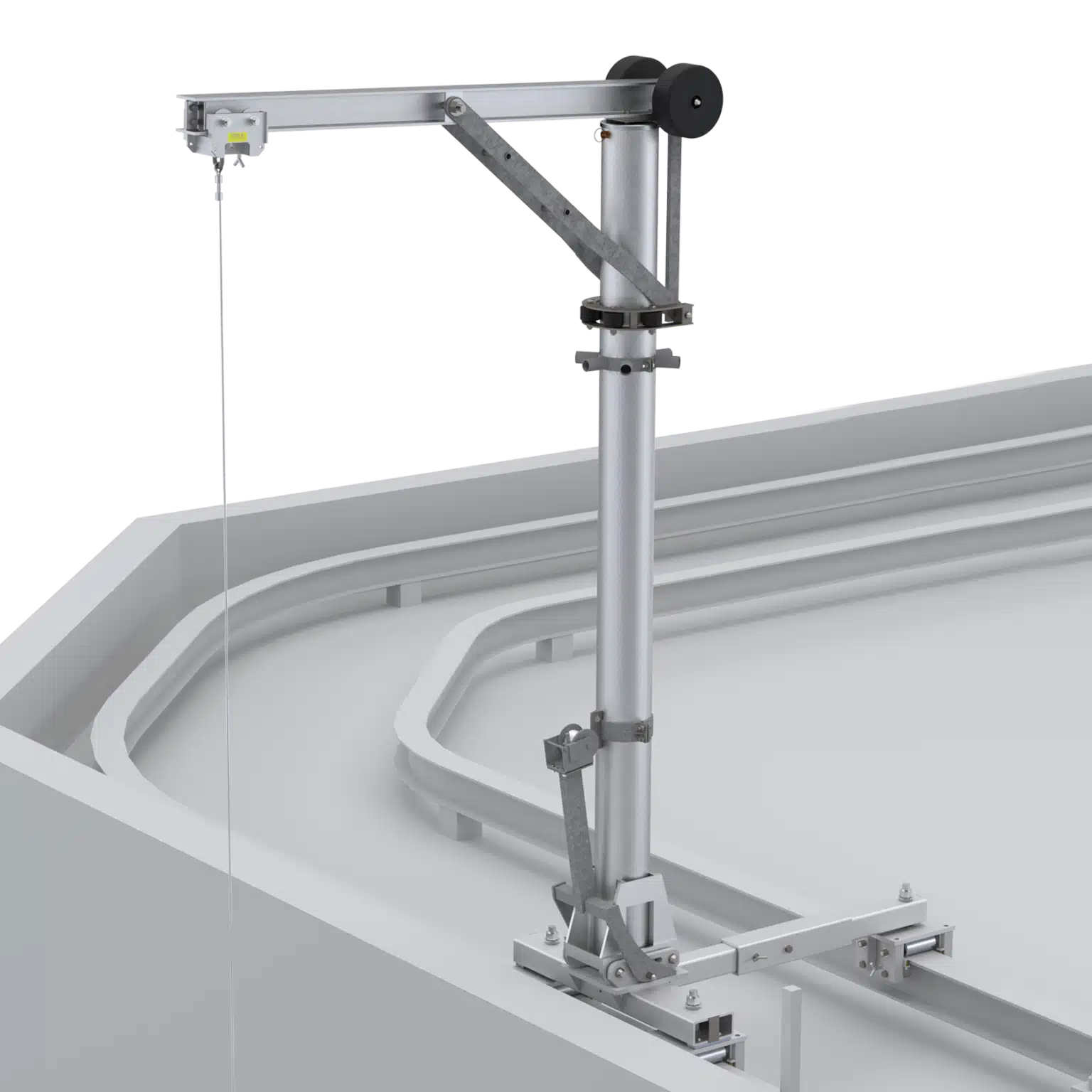
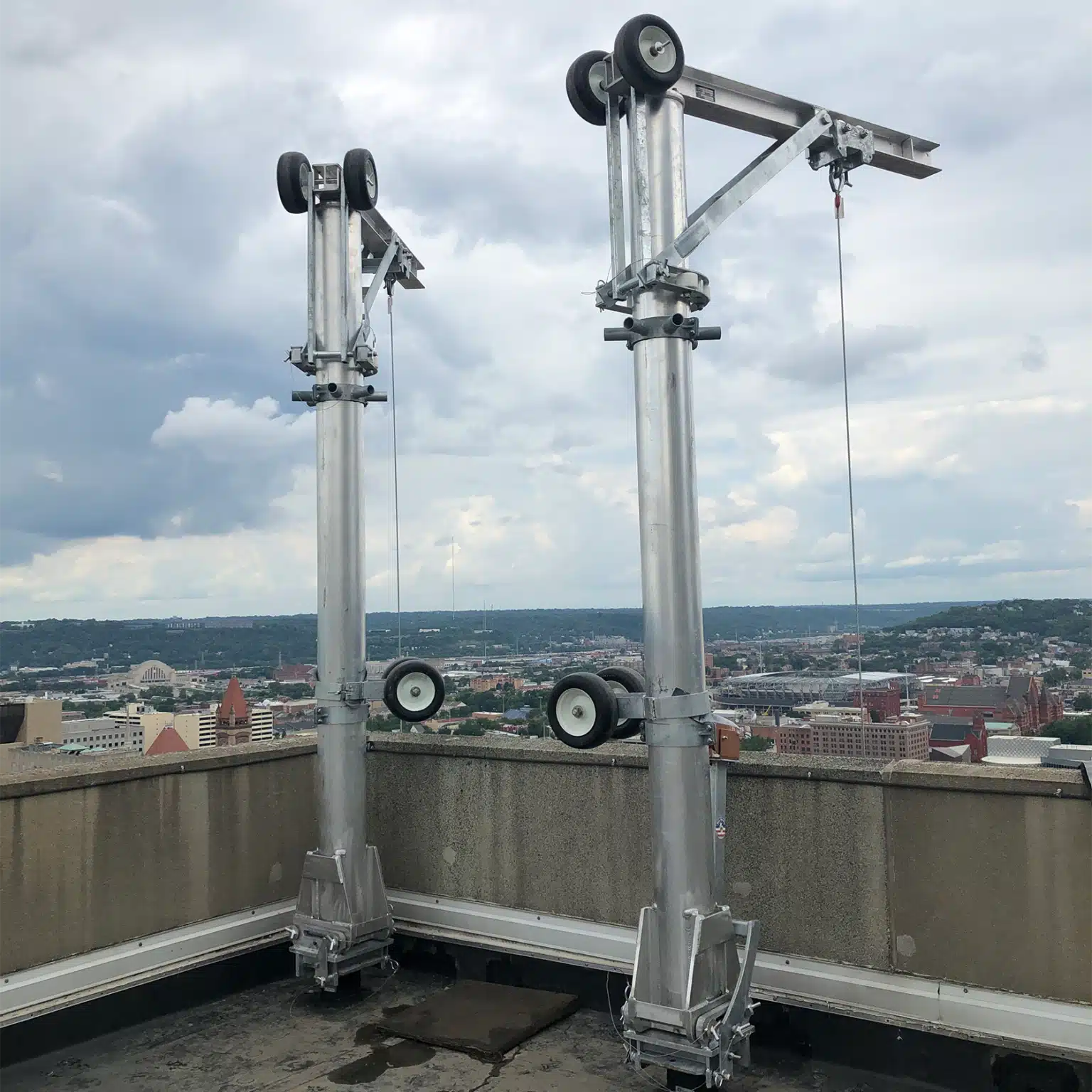
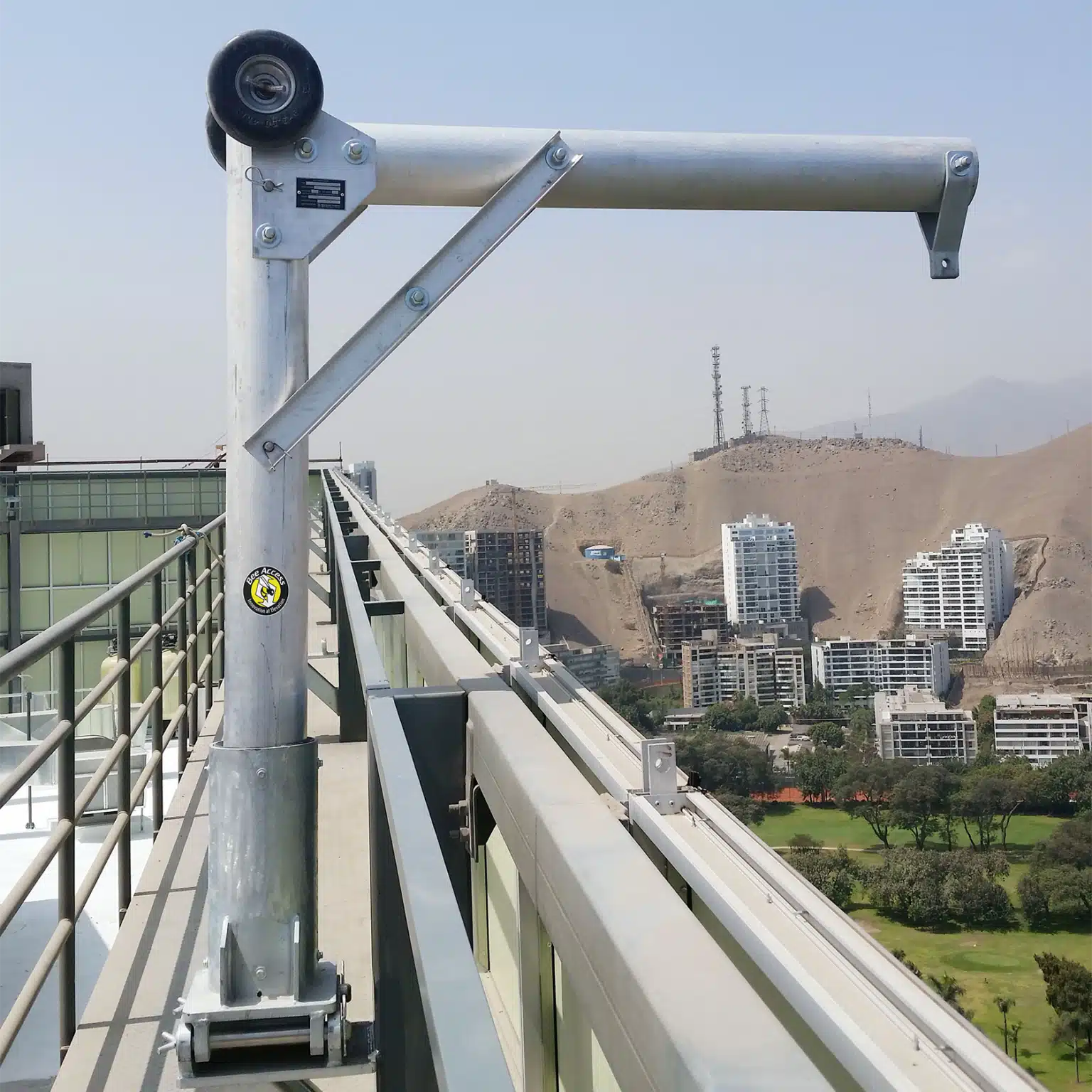
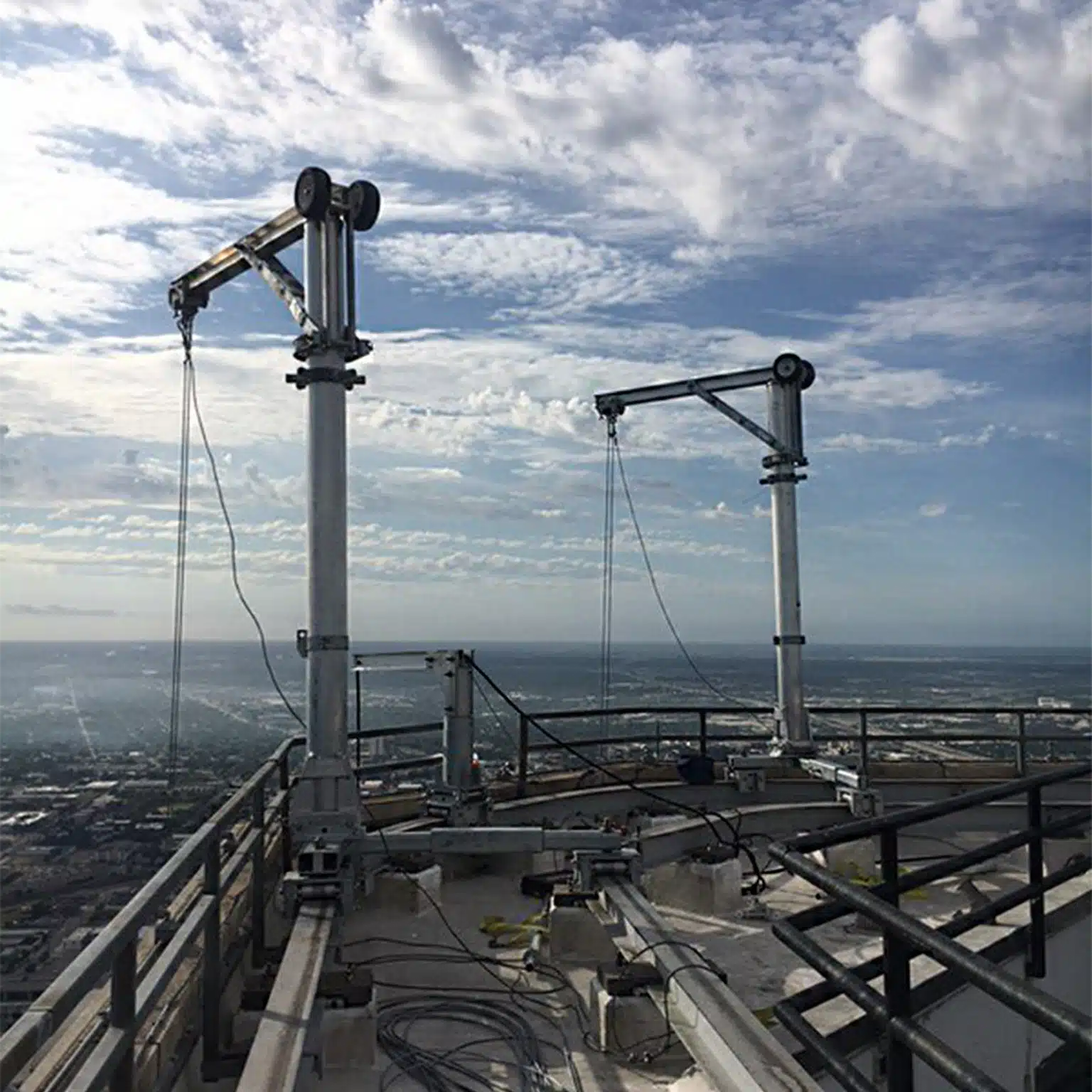
Davit arms are structural devices installed on rooftops that support suspended platforms or rope descent systems used for exterior building maintenance.
A davit system typically includes:
- davit arm (removable or fixed)
- base or socket system
- tie-back or anchorage connection
- suspension rigging interface
These systems allow workers to safely access building façades without relying on temporary scaffolding or improvised access methods.
Under Cal/OSHA Title 8 §3281, a davit is defined as a device used to suspend a working platform from a building, making it a critical component of façade access systems.
How Davit Arms Are Used in Building Maintenance
Davit arms are designed to support suspended access equipment, allowing maintenance crews to perform work along vertical building surfaces.
Common applications include:
- window cleaning
- façade inspections
- sealant replacement
- waterproofing work
- exterior repairs
Because these systems support suspended workers, they must be engineered with both structural integrity and operational safety in mind.
Under Cal/OSHA Title 8 §3291, rooftop systems such as davits must be supported by engineering calculations prepared by a licensed engineer to verify structural integrity.
Schedule a Davit Arm Evaluation →
Engineering and Structural Considerations
Structural Load Path
davit arm → base/socket → structural connection → building frame
If the load path is not properly designed, forces can be transferred into non-structural elements such as roof membranes or parapets, creating unsafe conditions.
Anchorage and Tie-Back Requirements
Davit systems rely on secure anchorage connections to stabilize loads.
- connected to the structural frame
- supports required loads
- part of engineered design
Additionally, tie-back anchorages used with suspended systems must typically support 5,000 pounds in any direction when used for fall protection connections.
See how tie-back anchors integrate with davit systems.
Equipment Stability and Safety Factors
- suspended loads remain stable
- workers operate safely
- equipment performs under real-world conditions
Design vs. System Selection
- building height and geometry
- façade complexity
- maintenance frequency
- structural capacity
- required reach and coverage
This is why davit arms must be engineered as part of a complete façade access system.
Request Engineering Support →
Inspection, Testing, and Lifecycle Requirements
- inspection before initial use
- annual inspection minimum
- structural and operational verification
Routine inspections help identify wear, corrosion, anchorage issues, and operational defects.
Explore inspection and recertification services.
When Buildings Need Davit Arms
- high-rise commercial buildings
- hospitals and institutions
- residential towers
- universities
- mixed-use developments
Davit Arms and California Compliance
Façade access systems must meet strict Cal/OSHA Title 8 requirements.
Engineering involvement is critical to ensure compliance, load capacity, and safe operation.
Schedule an On-Site Assessment →