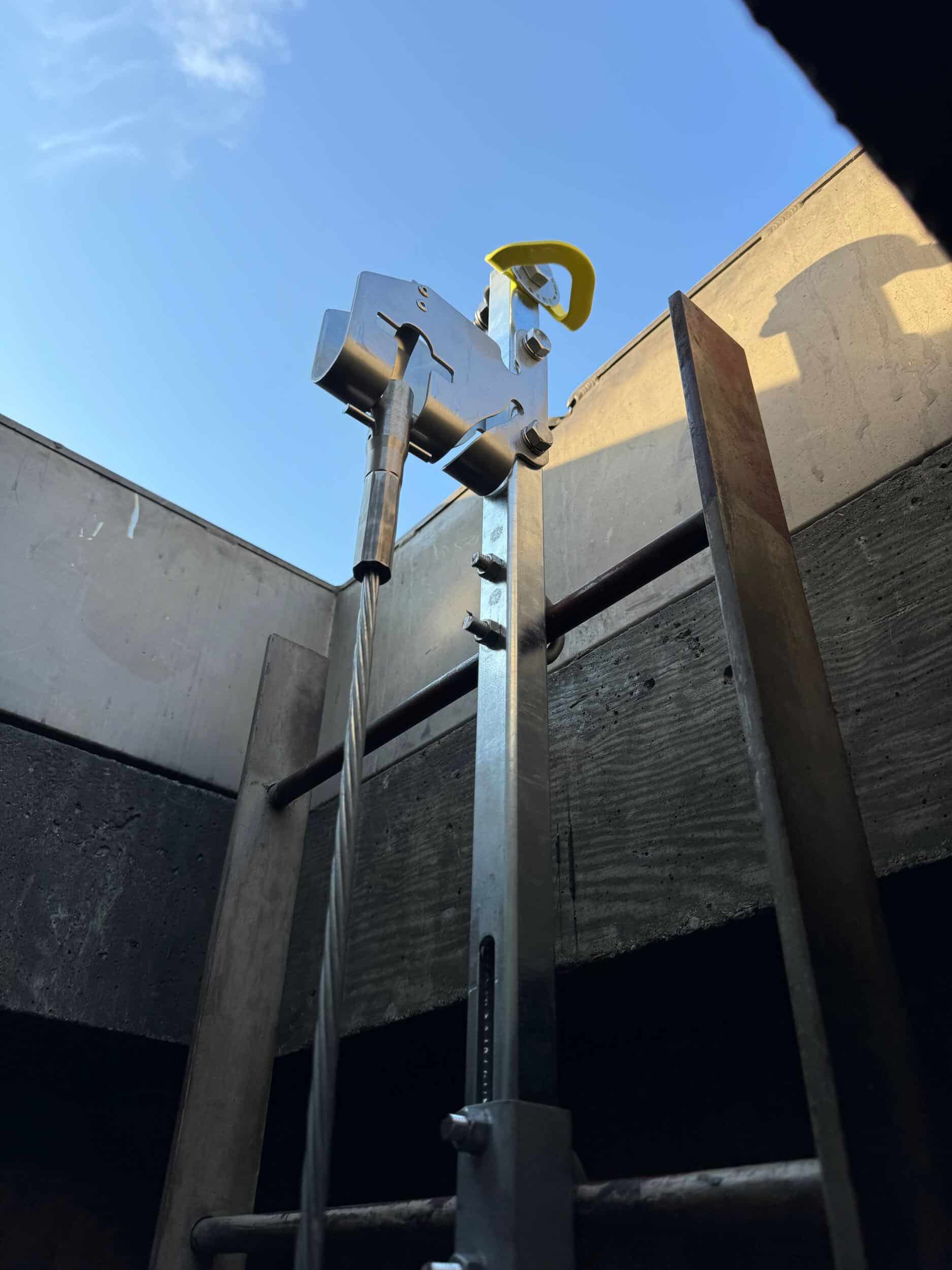
Vertical Lifelines

Vertical lifelines are engineered fall arrest systems designed to protect workers while climbing fixed ladders and vertical access structures. These systems provide continuous protection from the ground to the top of the climb, eliminating exposure during ascent and descent.
Climbing remains one of the highest-risk activities at height. A single misstep can result in serious injury or worse. In California, ladder safety requirements are evolving—traditional ladder cages are being phased out, and vertical lifeline systems are becoming the standard for compliant fall protection.
 
Title 8 Builders provides vertical lifeline system design, engineering, installation, inspection, and retrofit services, delivering systems that integrate seamlessly with ladder fall protection systems, rooftop access points, and structural access systems.  Schedule an On-Site Vertical Lifeline Assessment →
 

What Are Vertical Lifelines?

Vertical lifelines are fall arrest systems that run along the length of a fixed ladder or vertical structure. Workers connect to the system using a traveler or shuttle device, which moves with them as they climb. Key components include: These systems ensure that workers remain continuously tied off, reducing fall exposure throughout the entire climb. Under Cal/OSHA Title 8 §1670, fall arrest systems must be designed to limit fall forces and provide adequate anchorage strength for worker protection. :contentReference[oaicite:0]{index=0}

Why Vertical Lifelines Are Critical

Without continuous fall protection, ladder climbs expose workers to risk from: Vertical lifelines eliminate this gap in protection by ensuring workers are connected at all times. Additionally, Cal/OSHA Title 8 §3277 requires fixed ladders to be designed for safe access, and evolving safety standards are moving away from cages as a primary protection method. :contentReference[oaicite:1]{index=1} Vertical lifelines provide a more reliable and controlled fall protection solution compared to traditional ladder cages. Request Engineering Consultation for Vertical Lifeline Systems →

Types of Vertical Lifeline Systems

Cable-Based Vertical Lifelines

Flexible cable systems that allow a traveler to move along the line during ascent and descent. Commonly used for:

Rigid Rail Systems

Fixed rail systems provide guided fall arrest with minimal deflection. Used in:

Traveler & Shuttle Systems

Traveler devices attach to the lifeline and move with the worker, allowing hands-free climbing, automatic locking in the event of a fall, and smooth movement along the system.

Custom Fabricated Systems

Custom solutions are required when ladder configurations are unique, structural conditions vary, or access points are non-standard.

Retrofit & Replacement Systems

Many existing ladders rely on cages that no longer meet modern safety expectations. Retrofit solutions allow facilities to replace cages with vertical lifelines and upgrade non-compliant systems.

Engineering and Structural Design Considerations

Anchorage Strength

Under Cal/OSHA Title 8 §1670, anchorages used for fall arrest must support at least 5,000 pounds per worker or be part of a system designed with a safety factor of two. :contentReference[oaicite:2]{index=2}

Structural Load Path

Fall forces are transferred through the system from traveler to lifeline to anchor and into the structural member. Engineering ensures these forces are safely absorbed and distributed.

System Compatibility

Vertical lifelines must be compatible with harness systems, connectors, ladder configurations, and access points.

Qualified vs Competent Oversight

System design must be completed by a qualified person, while inspection and use must be overseen by a competent person. Schedule a Vertical Lifeline System Evaluation →

Applications for Vertical Lifelines

Any location where workers must climb vertically can benefit from continuous fall protection.

Supporting Cal/OSHA Compliance

California safety regulations require fall protection when workers are exposed to fall hazards during ladder use. Under Cal/OSHA Title 8 §3277, fixed ladders must provide safe climbing conditions, while §1670 governs fall arrest system requirements and anchorage strength. :contentReference[oaicite:3]{index=3} Vertical lifeline systems help facilities meet fall protection requirements, improve worker safety, and align with evolving safety standards.

Inspection and Lifecycle Management

Vertical lifeline systems must be inspected regularly to ensure safe operation. Inspection includes: Routine inspection ensures continued compliance and reliable performance. Book a Vertical Lifeline Inspection →
   

Frequently Asked Questions

Are ladder cages still allowed?

Ladder cages are being phased out as a primary fall protection method. Vertical lifelines provide more effective protection.

Do vertical lifelines provide continuous protection?

Yes. Workers remain tied off from the bottom to the top of the climb.

Can vertical lifelines be added to existing ladders?

Yes. Retrofit systems can be installed on most existing ladder structures.

What is a traveler or shuttle?

It is a device that connects the worker to the lifeline and moves with them during climbing.

How often should systems be inspected?

They should be inspected regularly as part of a fall protection program.