Choosing the Right Fall Protection
Climbing a fixed ladder is one of the riskiest things workers do on any site. One slip can turn serious fast. While horizontal lifelines protect workers moving side-to-side, vertical access calls for a different approach. The two most common solutions are ladder anchors and vertical lifelines (VLLs)—and the right choice depends on ladder height, frequency of use, and what Cal/OSHA and OSHA require.
Ladder Anchors
Best for ladders ≤50 ft
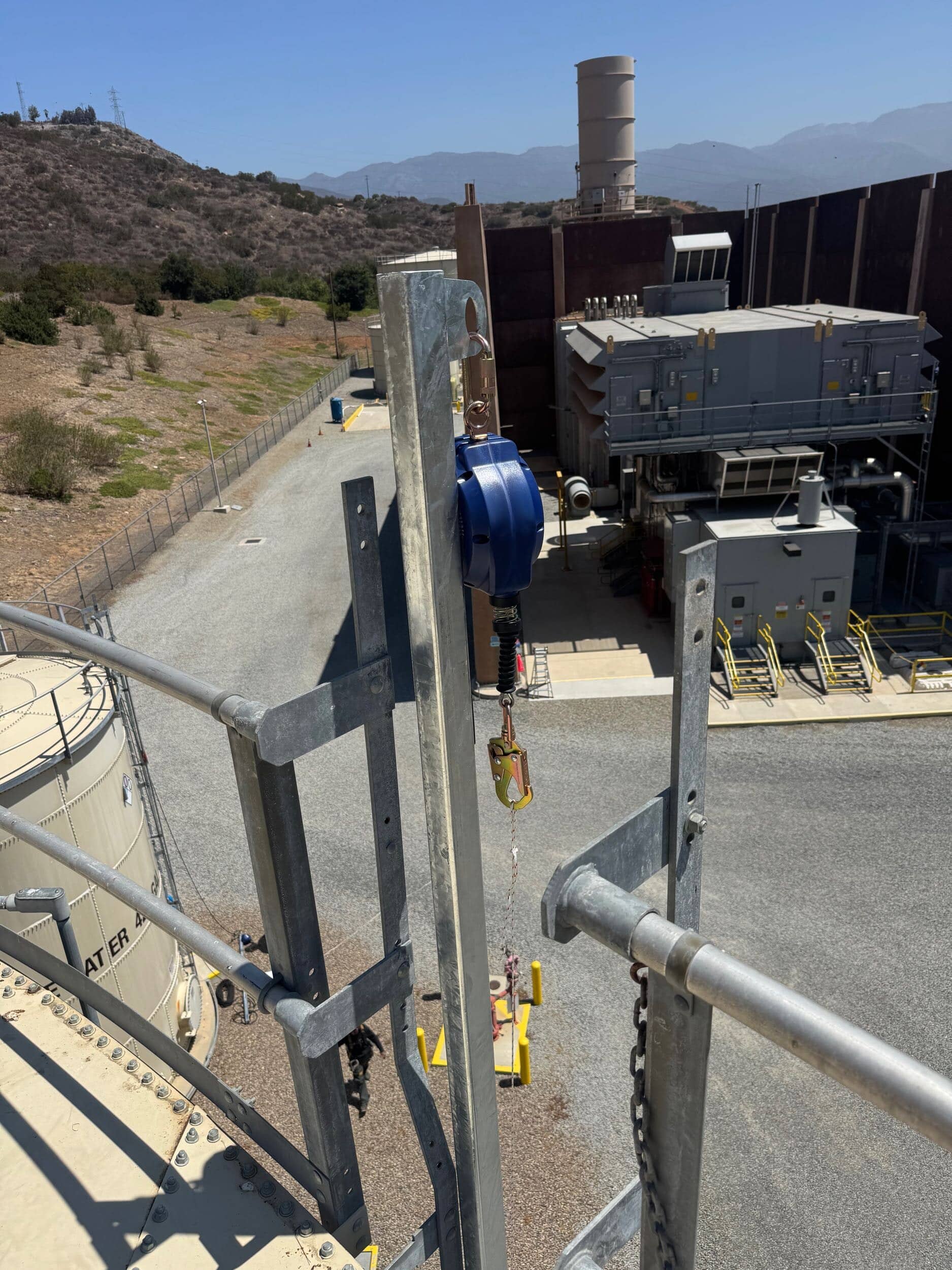
Ladder anchors are fixed attachment points for connecting a self-retracting lifeline (SRL). They’re cost-effective, simple to install, and easy to retrofit to most existing ladders.
- Advantages: Efficient for shorter climbs, quick to install, and meets OSHA and ANSI Z359 standards with minimal modification.
- Limitations: Not designed for ladders taller than 50 ft (limited SRL length). Improper spacing can cause SRL lock-up or allow too much free fall.
- Typical applications: Utility and service ladders in warehouses, mechanical access ladders, and light maintenance use.
See how ladder solutions fit into our Access & Ladder Fall Protection Systems.
Vertical Lifelines (VLLs)
Best for ladders >50 ft
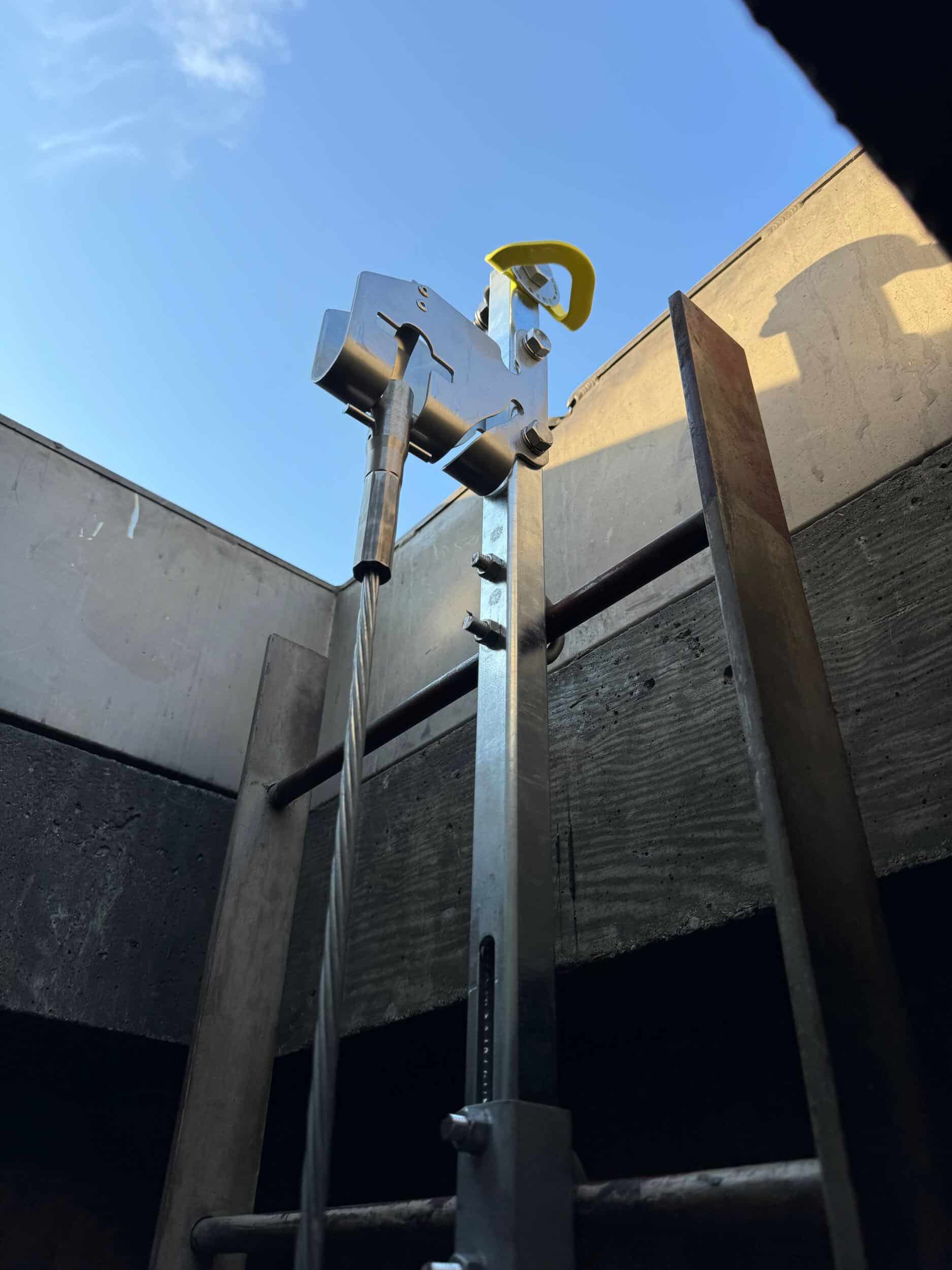
Vertical lifelines run the full length of the ladder, typically paired with a sleeve or SRL for continuous tie-off. They’re designed to keep workers protected during long climbs.
- Advantages: Continuous fall protection on tall structures, reduces free-fall distance, and supports multiple user configurations.
- Limitations: Higher upfront cost and requires professional design to maintain cable tension and avoid tangling.
- Typical applications: Lattice towers, silos, cooling towers, and industrial shafts.
Explore our Vertical Lifelines solutions.
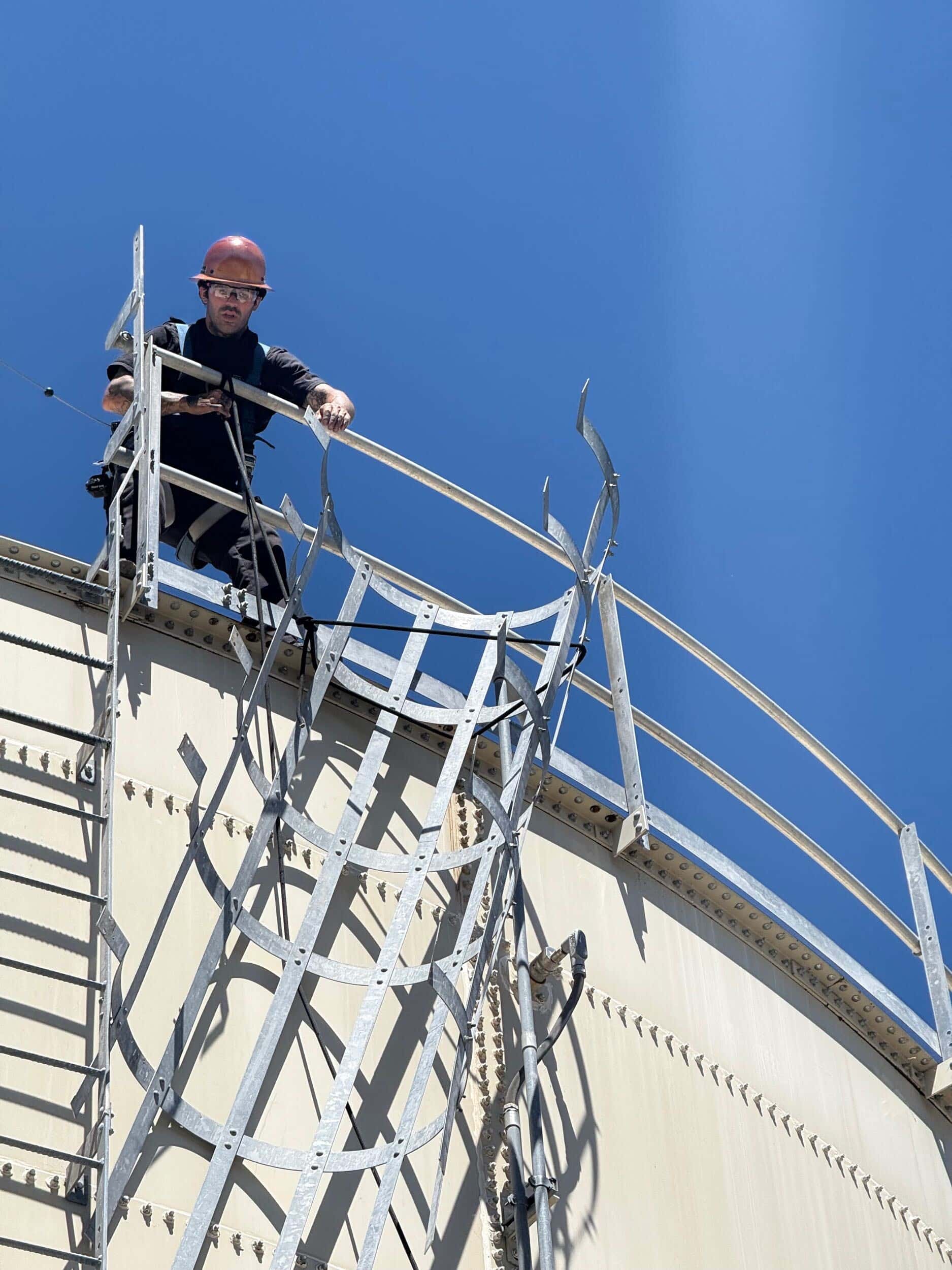
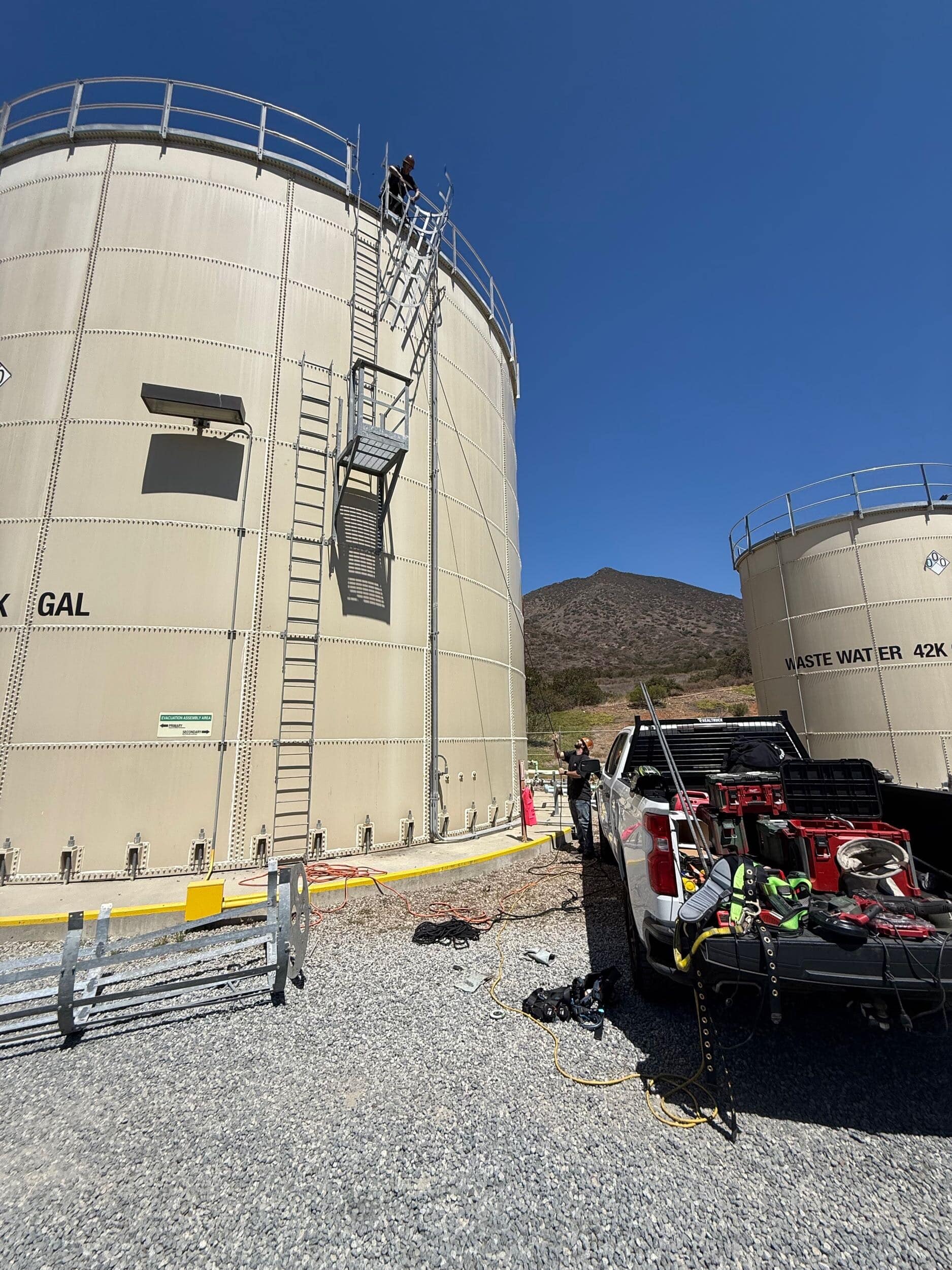
Ladder Cages: A System Being Phased Out
Ladder cages were once a go-to solution, but modern safety standards—OSHA 1910.27 and CCR Title 8, Section 3277—recognize they don’t reliably stop falls. Cages can actually restrict movement and make rescues more complicated.
- Do not truly arrest a fall.
- Restrict worker mobility and increase risk during rescues.
- Being phased out in favor of active fall arrest systems like anchors or lifelines.
Design Factors You Can’t Skip
- Load ratings: Anchors must handle worst-case fall forces (typically 2:1 safety factor).
- Anchor placement: For ≤50 ft ladders, ensure SRLs extend fully without interference; for >50 ft, use vertical lifelines.
- Environment: Select materials resistant to corrosion, UV, and wear—like stainless or galvanized steel.
- Extreme heights: Always choose vertical lifelines for towers, silos, and tall shafts.
Support your design with our Design & Engineering Services.
Quick Comparison
| Solution | Ladder Height | Benefits | Limitations | Typical Use |
|---|---|---|---|---|
| Ladder Anchors | ≤50 ft | Cost-effective, easy retrofit | Limited by SRL length | Short to mid-height ladders |
| VLLs | >50 ft | Continuous protection, full coverage | Higher cost, tension management | Towers, silos, tall ladders |
| Cages | N/A | Legacy passive protection | Don’t arrest falls, restrict rescue | Being phased out |
Bottom Line
- Ladder anchors are the practical solution for shorter, occasional climbs.
- Vertical lifelines are essential for continuous protection on tall ladders.
- Ladder cages are outdated and being replaced by active systems.
Next step: Schedule a Fall Hazard Assessment and our team will help you determine which ladder protection system fits your site best.