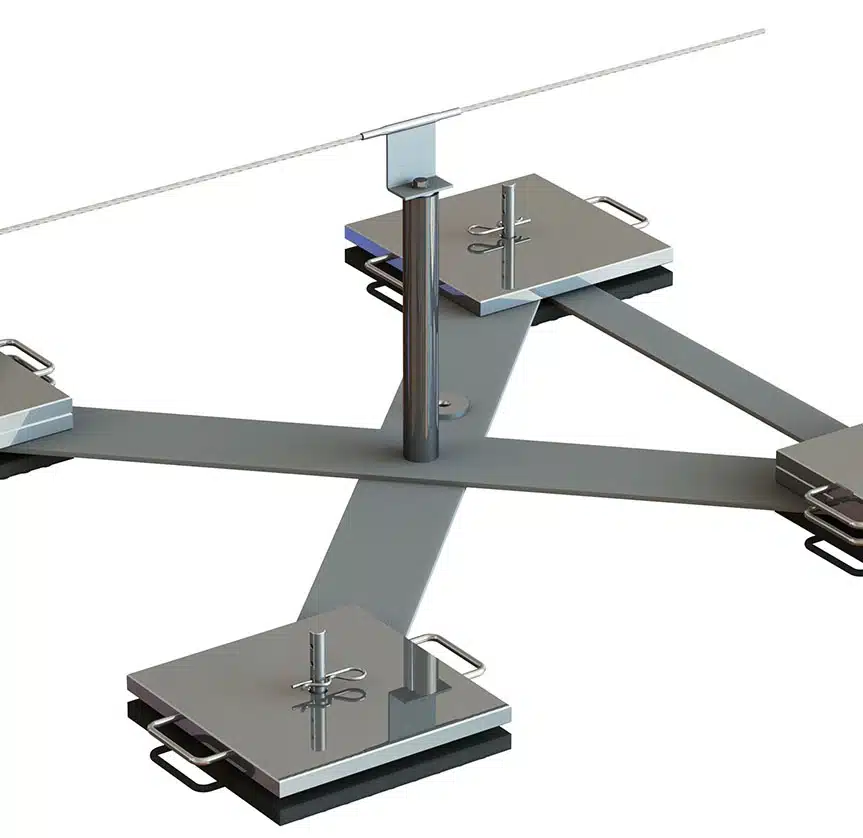
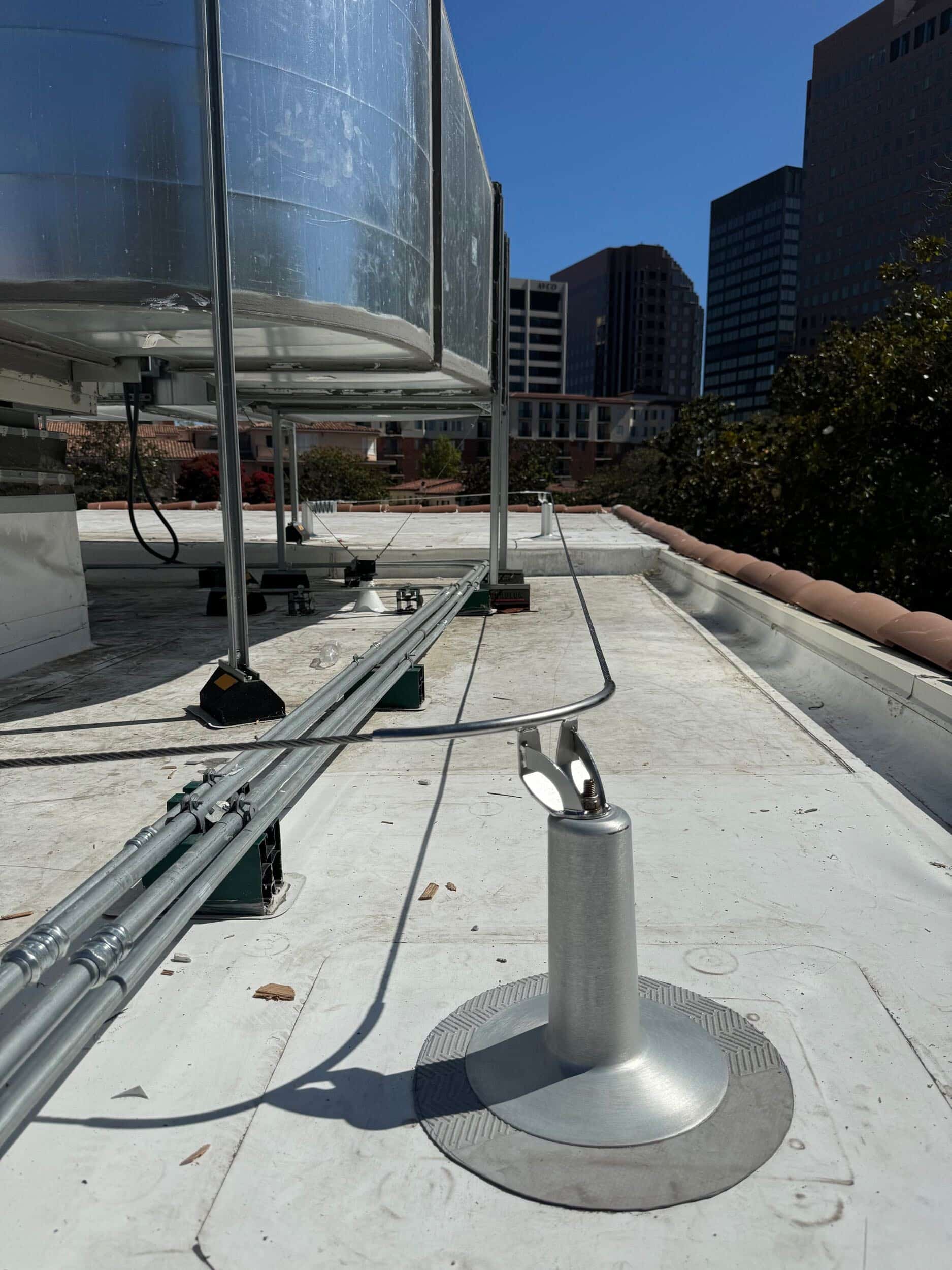
Horizontal lifelines (HLLs) are one of the most flexible tools in modern fall protection. They let crews move freely across elevated work areas while staying tied off the entire time. Unlike fixed anchors or ladder tie-offs, an HLL is built for mobility—and when designed correctly, it can support multiple users at once. Choosing the right Horizontal Lifelines for your site depends on your environment: where it attaches, how much load the structure can handle, and what work will be performed. Below are the three main HLL types and where each fits best.
1. Floor-Mounted Horizontal Lifelines
Common on elevated walkways, platforms, and mezzanines, floor-mounted systems anchor into structural steel or concrete and absorb fall forces along a horizontal plane.
Best when:
- The fall hazard runs along a single path (e.g., a walkway).
- The structure below can safely handle transferred loads.
- A permanent installation is acceptable, even if posts take some floor space.
Why it works: Minimal overhead obstruction—ideal for tight spaces or retrofit projects where ceilings/roofs can’t support anchors.
2. Wall-Mounted Horizontal Lifelines
When headroom is limited or a walkway runs alongside a wall, wall-mounted lifelines transfer loads laterally into the wall or frame instead of vertically into the roof or floor.
Best for:
- Narrow corridors or catwalks with little clearance above.
- Sites where roof penetrations aren’t possible.
- Work zones where movement follows a single wall or façade.
Engineer note: A licensed engineer should verify the wall can handle dynamic fall forces before installation.
3. Overhead Horizontal Lifelines
The most common option for rooftops, industrial facilities, and production areas. Mounted above the user—on beams, trusses, or roof structures—overhead HLLs allow unrestricted movement below the line.
Go-to when:
- Workers need to cover large areas or multiple work zones.
- Multiple users will be tied off at the same time.
- The system must integrate with self-retracting lifelines (SRLs) or other fall arrest devices.
These systems often need engineered supports or tensioned anchors to control cable sag and maintain proper clearance.
Key Things to Remember
- Engineer verification: Every HLL should be designed or reviewed by a qualified engineer. A simple cable can generate thousands of pounds of force in a fall.
- User capacity & gear compatibility: Confirm ratings for the number of users and compatibility with SRLs or lanyards.
- Fall clearance: HLLs stretch under load—account for sag to ensure enough clearance below.
- Environment: Sun, corrosion, and weather impact tension and integrity over time. Plan for routine inspections and maintenance.
Final Thoughts
No single horizontal lifeline fits every job. Floor-, wall-, and overhead-mounted systems each have advantages based on structure and workflow. Understand your building, how your crews move, and the site’s structural limits. With proper design and verification by an experienced fall protection engineer, a well-planned HLL can boost both safety and productivity.
Next Step
Contact Title 8 Builders to schedule a horizontal lifeline design or load testing assessment for your facility. Our team will ensure your system is engineered, tested, and documented in full compliance with Cal/OSHA and ANSI standards.